




Red Rubber
Inspection in Aerospace
Terahertz NDT for Non-Contact Red Rubber Thickness,
Bond Integrity and Internal Defect Inspection.
Red rubber is used in aerospace thermal-protection structures where thickness, bond quality and internal integrity are critical. During manufacturing and service, hidden defects such as voids, inclusions, delamination, debonding and thickness variation can develop within the material.
TeraNIM-Aero uses Terahertz Time-Domain Spectroscopy (THz-TDS) to inspect red rubber non-destructively and without physical contact, enabling aerospace teams to evaluate material thickness, bond interfaces and subsurface defects without cutting the component or using liquid couplant.
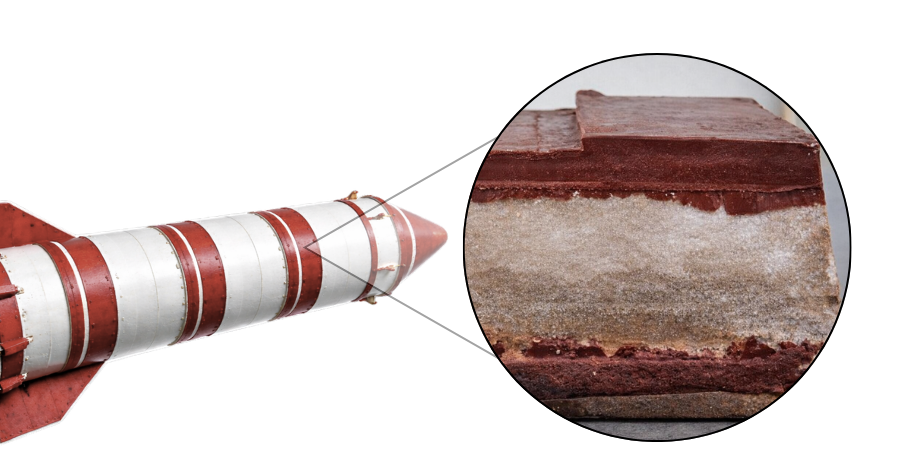
Why Red Rubber Needs Non-Contact Inspection?
- Material thickness can vary across manufactured components
- Voids and air gaps can develop inside the rubber structure
- Foreign inclusions may become embedded during manufacturing
- Bonded interfaces can develop delamination or debonding
- Single-sided non-contact inspection supports repeatable quality control
Conventional Red Rubber Inspection Challenges
- Hidden internal voids
- Thickness variation
- Foreign inclusions
- Delamination / debonding
- Need for non-contact inspection
How Terahertz Technology Works for Red Rubber Inspection
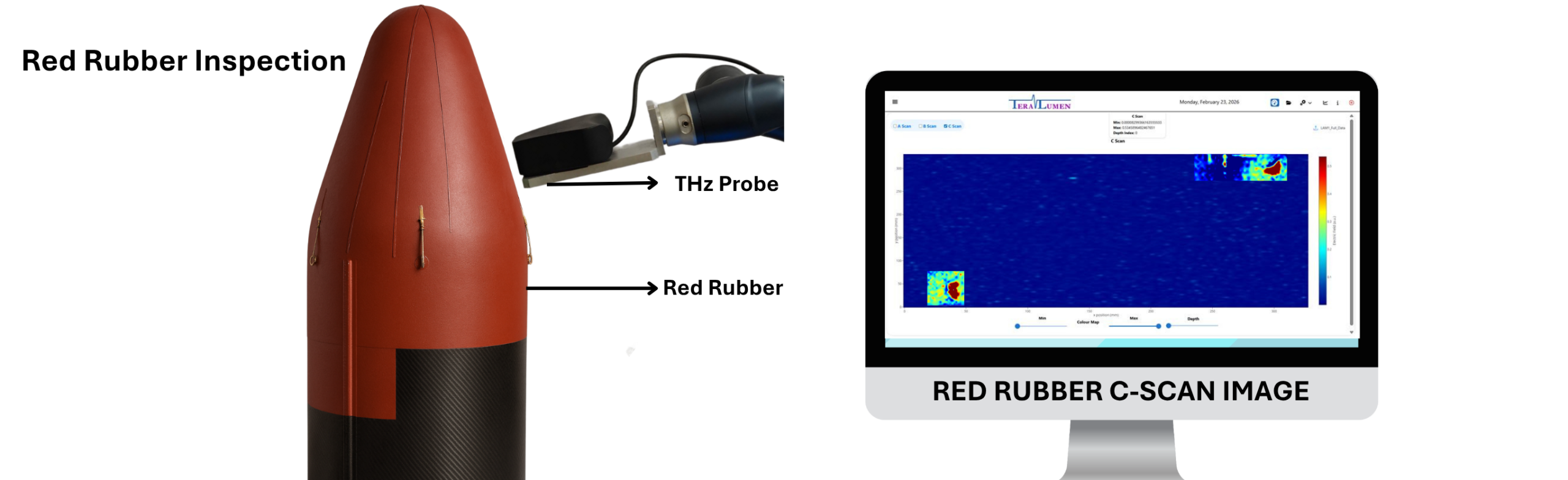
TeraNIM-Aero directs a THz pulse into the red rubber structure and analyses reflections generated from the material surfaces, internal interfaces and discontinuities. The time separation between reflections carries the optical thickness of the material between them, so a void, inclusion or debonded interface shows up as an extra reflection at a specific depth.
TeraNIM Red Rubber Inspection Workflow
Direct a THz pulse onto the red rubber surface and acquire the reflected signal using single-side, non-contact access.
Capture reflections from the rubber layer, bond interface and internal discontinuities such as voids, delamination or debonding.
Extract the reflected-signal features to determine thickness, interface condition and defect indications, then generate the inspection result.
Key Advantages for Aerospace OEMs & Research Organisations
- Non-Contact Inspection – No physical probe contact with the red rubber surface.
- Non-Destructive Testing – Inspect the material without cutting or sectioning the component.
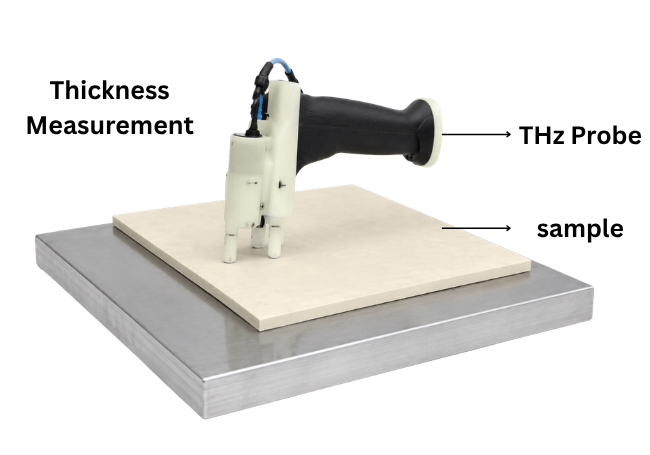
- Thickness Measurement – THz time-delay information determines calibrated red rubber thickness.
- Internal Defect Detection – Voids, inclusions and other discontinuities alter the reflected THz signal.
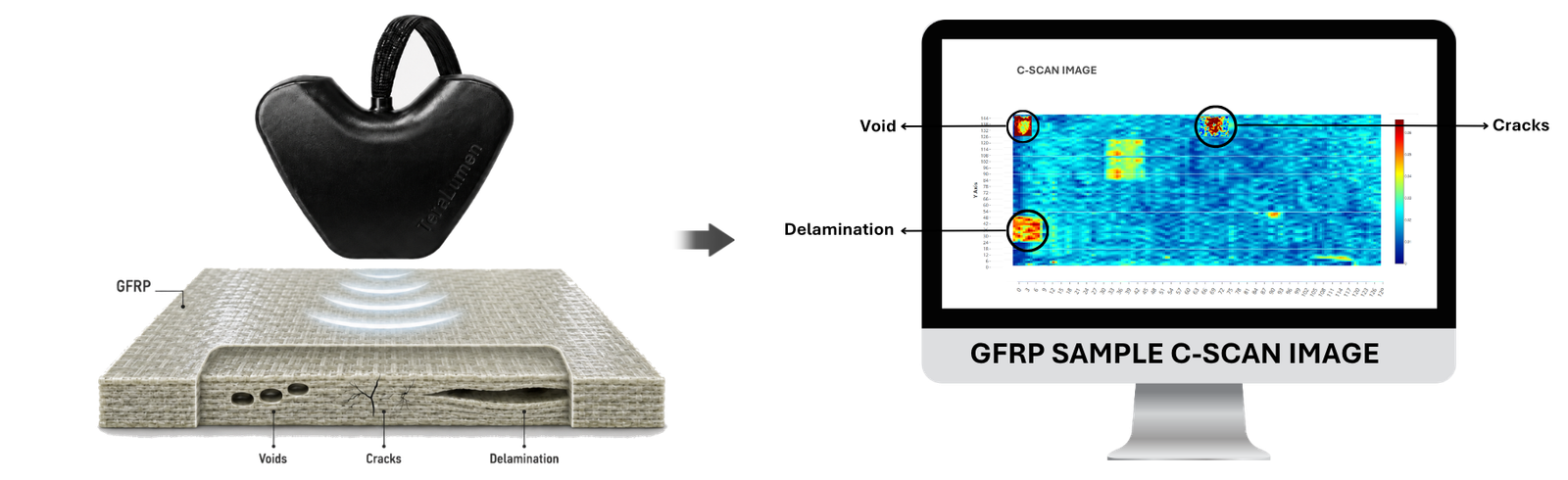
- Bond & Defect Mapping – Scanning multiple locations visualizes thickness variation and interface anomalies.
- Automation Ready – Integrates with scanners and automated positioning systems for repeatable inspection.
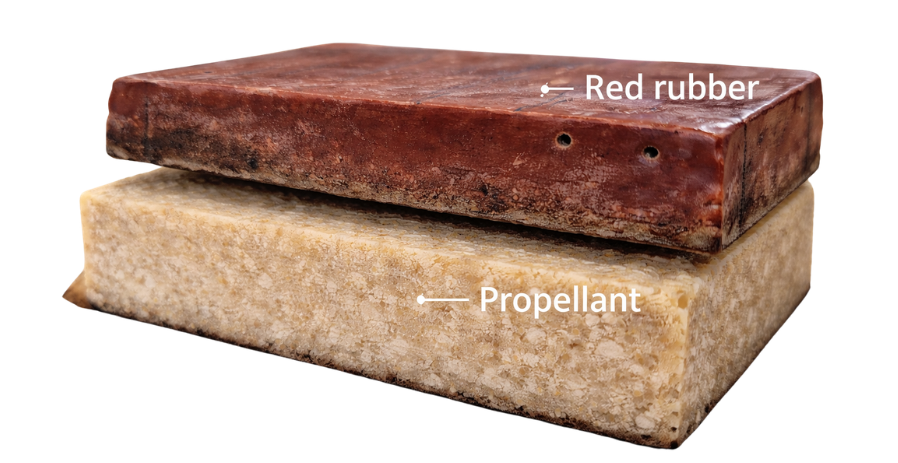
Red Rubber Quality Control with TeraNIM™
TeraNIM-Aero provides a non-contact and non-destructive approach for inspecting suitable aerospace red rubber structures. By combining THz reflection measurement, calibrated thickness analysis, interface evaluation and automated scanning, the system can support red rubber thickness measurement, void and inclusion detection, delamination and debonding assessment, defect mapping and digital aerospace quality control.
System configuration
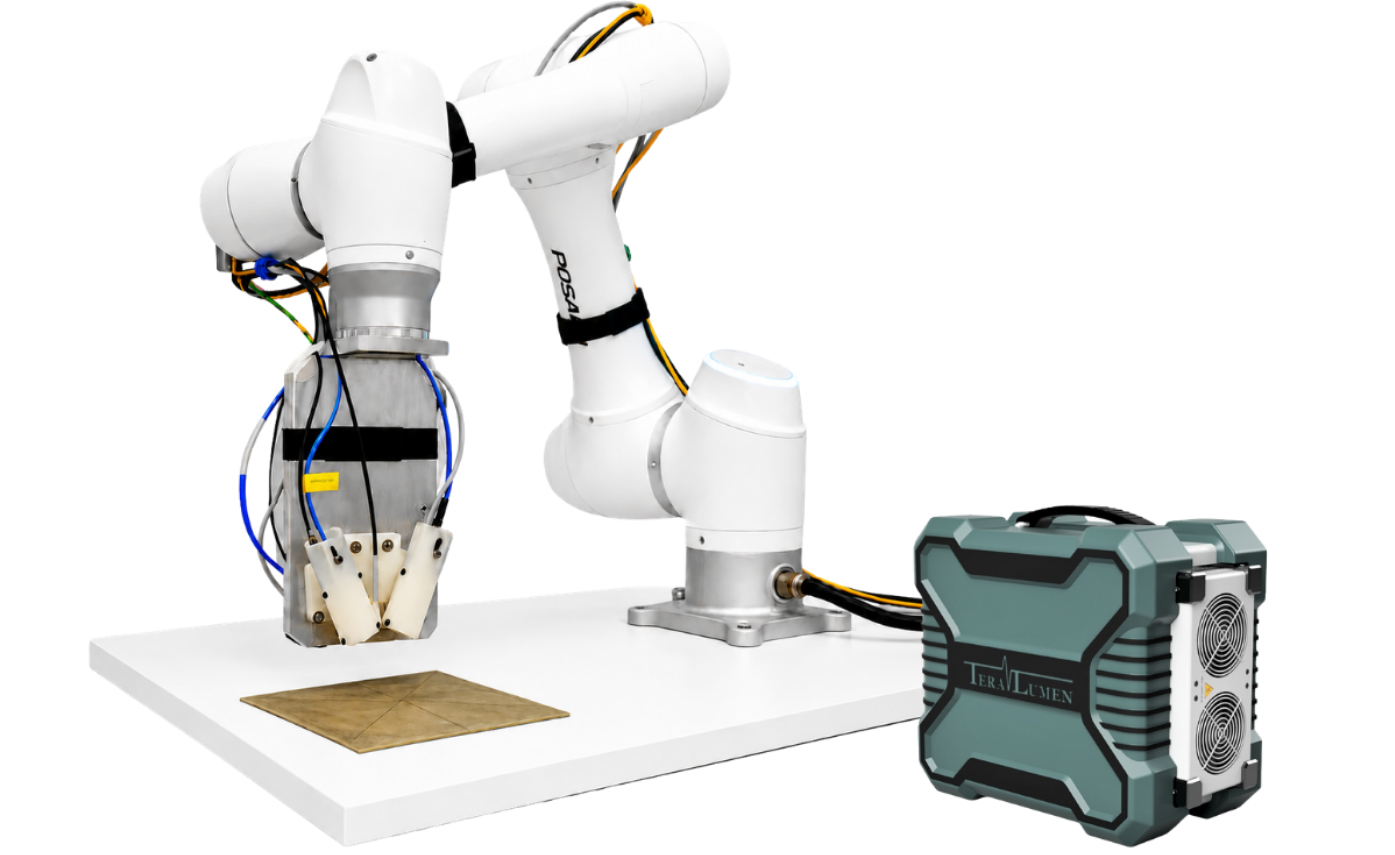
TeraNIM-Aero
Related Applications
THz NDT on Aerospace GFRP Composites
Quality Control of Polymer-Based Rubber Components
Frequently Asked Questions
Can THz inspect red rubber?
Yes. The current TeraLumen application page reports successful THz evaluation of red rubber and other polymer structures using THz-TDS.
Can TeraNIM-Aero measure red rubber thickness?
Yes, for a calibrated material. Time delays between relevant THz reflections can be converted into thickness using the measured refractive index.
What defects can be evaluated in red rubber?
Typical targets include voids, air gaps, foreign inclusions, delamination, debonding and thickness variation.
Can THz evaluate red rubber bonding?
Yes, where the rubber-to-adhesive or rubber-to-substrate interface produces a measurable THz response. Changes in the interface signal can indicate bonding anomalies.
Does the probe need to contact the red rubber?
No. TeraNIM-Aero performs the THz measurement without direct physical contact.
Can a defect map be generated?
Yes. By scanning multiple positions, THz measurement data can be converted into a spatial defect or thickness map.