




Lead-Acid Battery
Vent Cap Inspection
Non‑contact, Non‑destructive Testing of Hidden Vent Caps
in Sealed Automotive Batteries
In automotive lead-acid battery manufacturing, vent caps are critical for safe pressure regulation and gas release. Once assembled, these vent caps are sealed beneath plastic covers, making conventional inspection methods ineffective. TeraLumen’s terahertz inspection technology enables reliable subsurface verification of vent cap presence without disassembly, surface preparation, or production disruption.
Traditional Inspection & Challenges
Terahertz Inspection Workflow
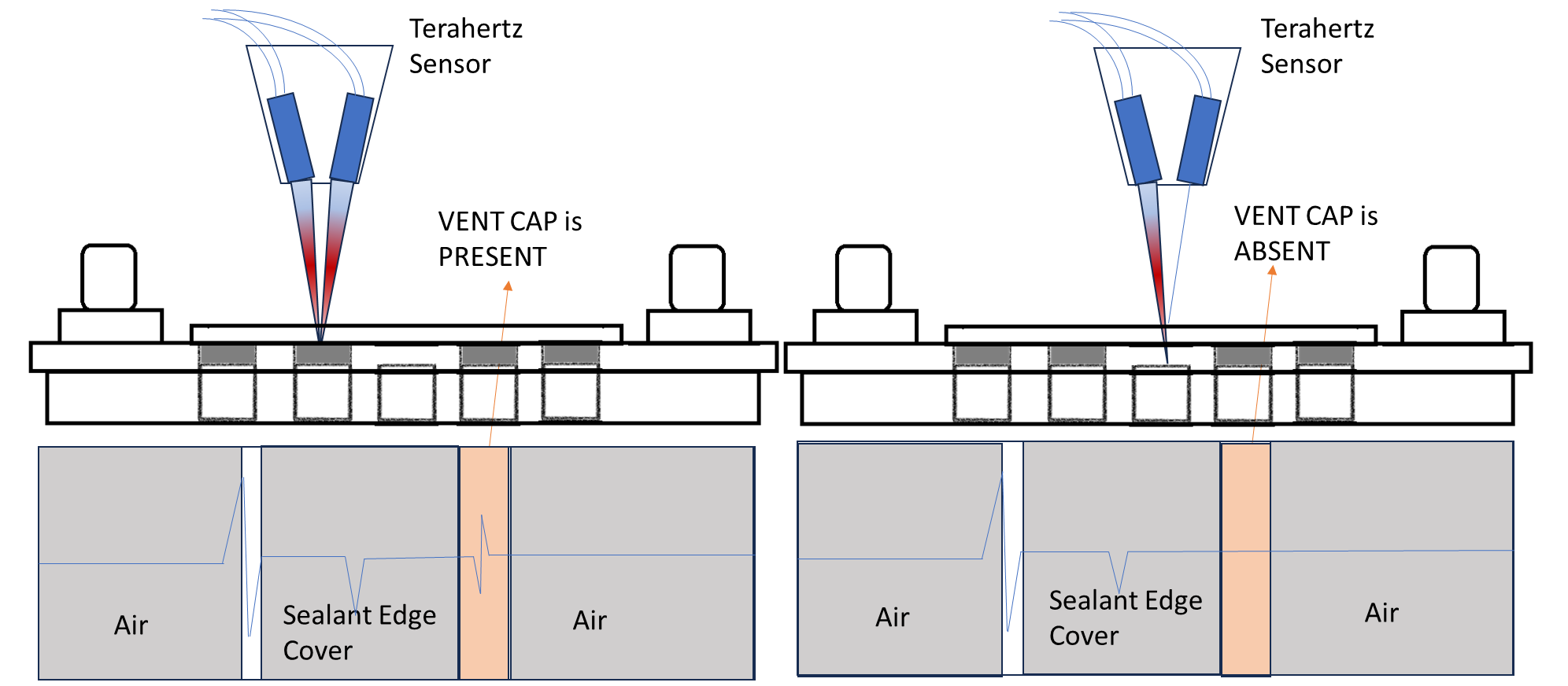
Direct a terahertz pulse onto the sealed battery surface (single-side access).
Capture reflections from internal interfaces—plastic, air gaps, and vent cap features
Extract signal features and classify: vent cap present vs missing (automation-ready).
THz Inspection Results & Key Advantages
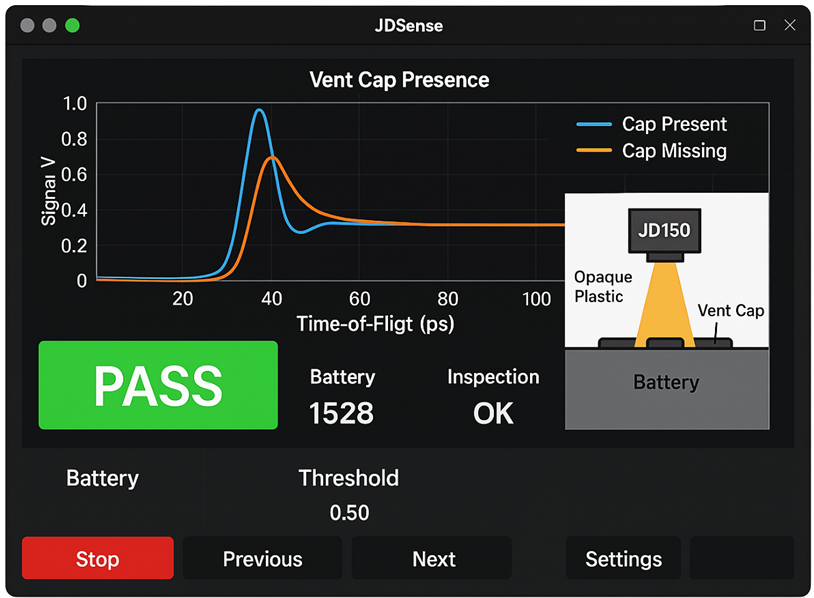
- Clear identification of acceptable and defective assemblies
- Single-side, non-contact inspection through plastic covers
- Reliable detection of vent caps beneath sealed covers
- Non-destructive and non-ionizing inspection method
- Automation-ready for inline production inspection
Conclusion
TeraLumen’s terahertz inspection technology provides a production-ready solution for verifying vent cap presence in sealed automotive battery assemblies. By enabling subsurface inspection where conventional methods fail, manufacturers can improve safety, reduce rework, and ensure consistent product quality.
Frequently Asked Questions
Can terahertz technology detect a vent cap after the battery is sealed?
Yes. TeraNIM can inspect through a suitable plastic battery cover and analyse reflections from internal interfaces to verify whether the vent cap is present beneath the sealed surface.
Does the battery need to be opened for inspection?
No. The inspection is non-contact and non-destructive, allowing vent-cap presence to be verified without opening or dismantling the battery assembly.
What does TeraNIM detect in this application?
TeraNIM analyses reflected THz signals from the plastic cover, internal air gaps and vent-cap features to distinguish between a correctly assembled battery and a missing vent cap.
Is single-sided inspection possible?
Yes. The THz measurement can be performed from the accessible outer surface of the sealed battery cover, making it suitable for single-sided inspection in the demonstrated configuration.
Can this inspection be automated for battery production lines?
Yes. The measurement and classification workflow can be integrated with automated scanning and production-line quality-control systems after validation for the specific battery design and inspection configuration. The current application is also suitable for automation-ready inspection workflows.
Does the system require calibration for different battery designs?
Yes. The inspection should be configured and validated for the specific battery cover material, cover thickness, vent-cap geometry and measurement location to establish reliable present/missing classification.