



Paint Coating
Thickness Measurement
Terahertz Technology for Primer, Base Coat, Clear Coat or Top Coat
DFT Measurements.
Two-wheeler paint shops handle high part variety, complex plastic geometries and a mix of robot and manual coating operations. TeraNIM-Auto helps measure paint dry film thickness non-destructively, so production teams can reduce destructive strip checks and build a digital DFT control workflow for Automotive plastic parts such as fenders, headlamp housings, fuel-tank covers, side trims, tail covers and grills
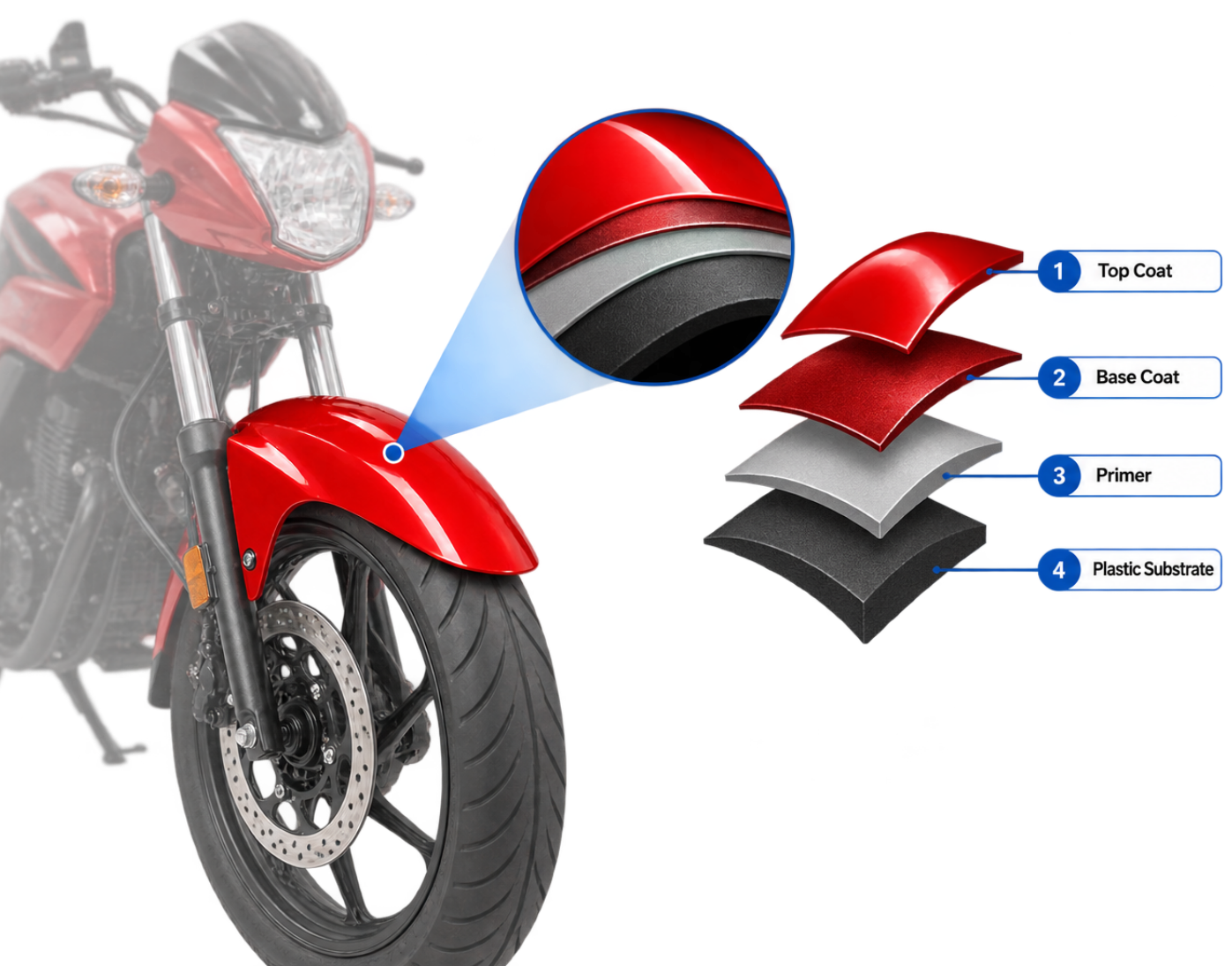
Why Paint Coatings Need Non-Contact Thickness Measurement?
- Multi-layer coating systems with primer, base coat and clear coat interfaces
- Coating thickness variation across complex, curved and contoured plastic parts
- Thin or uneven paint layers affecting appearance, adhesion and performance
- Non-uniform coating caused by spray application, part geometry and process variation
- Non-contact measurement required for finished plastic components without surface damage
Current Paint Coating Measurement Process
- Manual
- Contact-based
- Substrate-specific
- Limited to total coating thickness
- Individual-layer measurements require scratching and masking
How Terahertz Technology Work for Paint Coating Assessment
TeraLumen’s patented Terahertz Technology System generated THz waves from 0.1 to 5THz bandwidth. The THz waves refract and reflect at every coating layer interface. When sufficient dielectric contrast is >10% between coating layers. The time separation between interface reflections contains information about the optical thickness of each coating layer.
TeraNIM Automotive Paint Coating Inspection Workflow
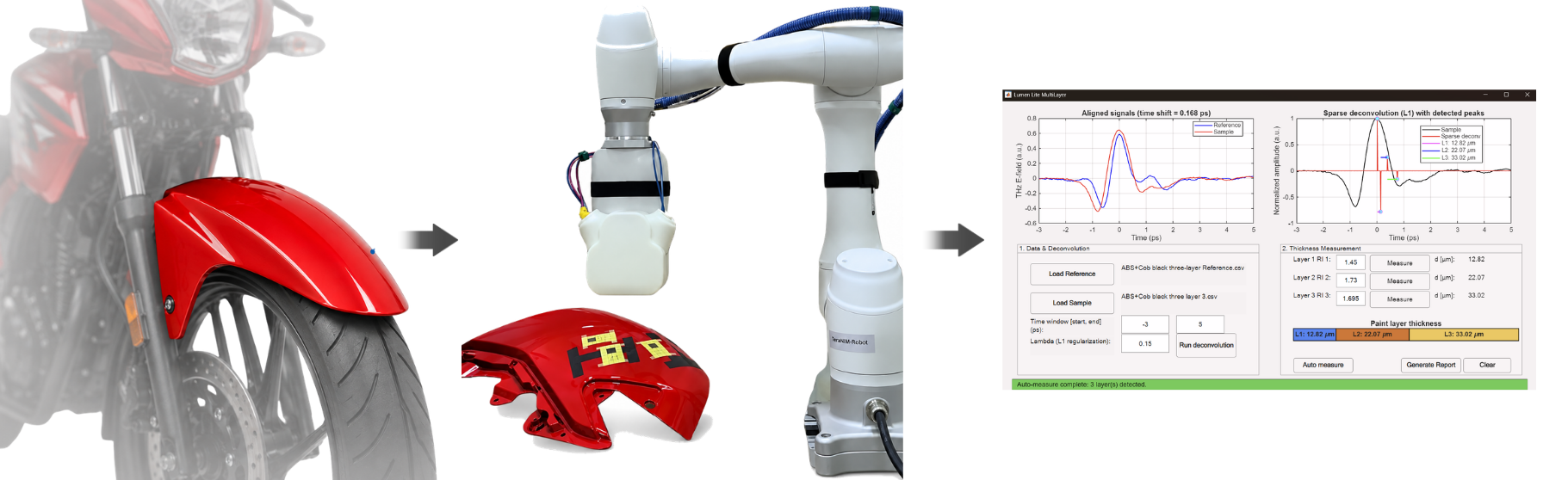
Direct a THz pulse onto the painted plastic or composite component and acquire reflected signals at defined measurement locations using non-contact access
Identify reflections from the primer, base coat, top coat and substrate interfaces using the calibrated THz measurement setup.
Calculate individual layer thickness and total coating thickness, compare results with tolerance limits, and generate the Pass / Fail inspection result.
Key Advantages to Automotive OEM’s
- Scrap Reduction – Not damaging the surface to do the inspection.
- Real-time Inspection – Enables to inspect every component.
- Reduce Rejections/Rework – Insights on coating deviations.
- Industry 4.0 – Reduction in human errors, digital transformation of manufacturing and industrial processes.
Automotive Paint Quality Control with TeraNIM™
TeraNIM™ provides a non-contact approach for evaluating individual layers within validated automotive paint systems. By combining THz reflection measurement, coating-specific calibration and digital analysis, the system can support automotive paint quality control, coating-process development, OEM specification verification and automated production inspection.
Solution With
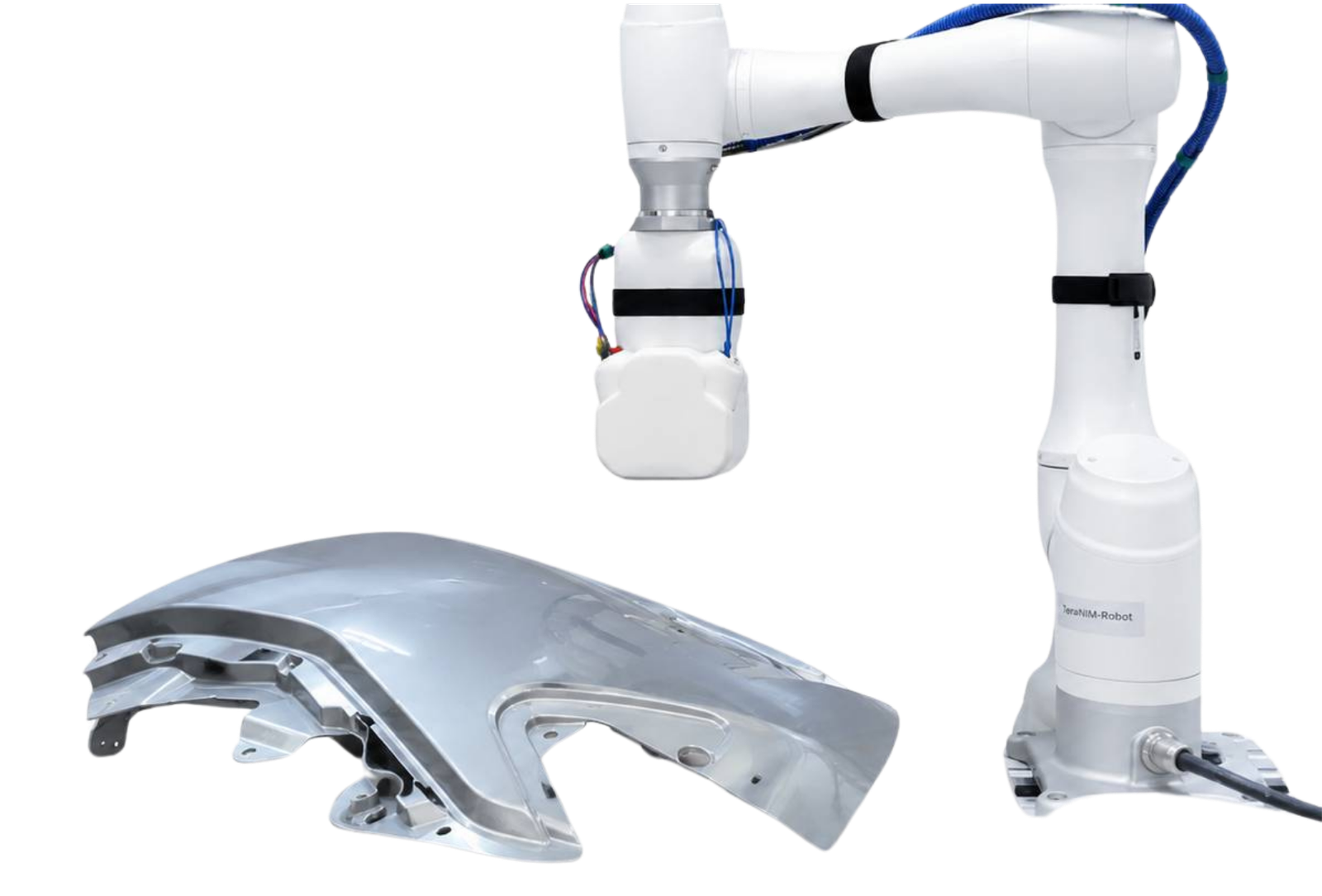
TeraNIM-Auto
Related Applications
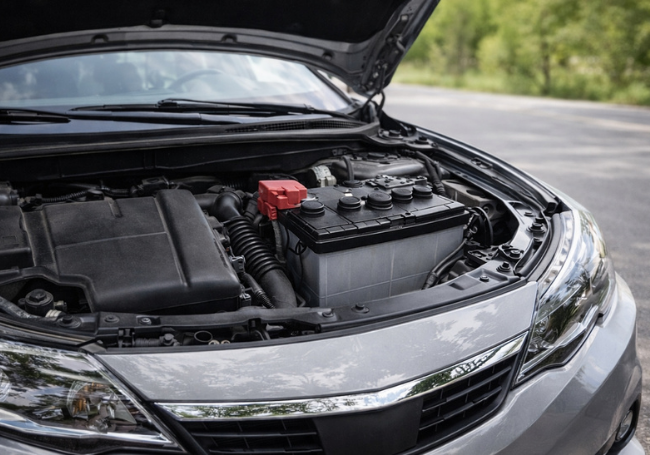
Lead-Acid Battery Vent Cap Inspection
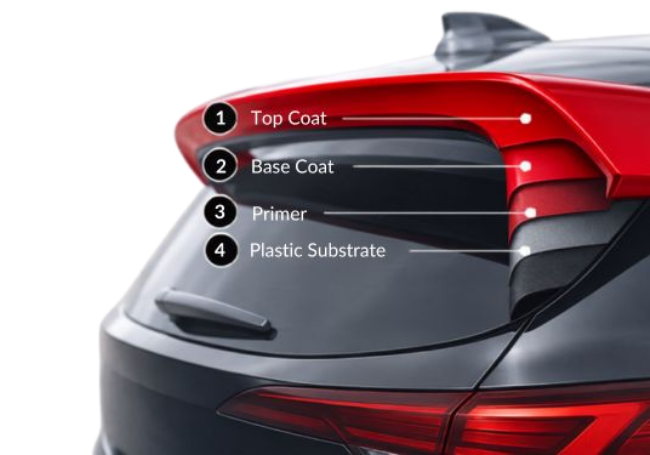
Multi-Layer Paint Coating Thickness Measurement
Frequently Asked Questions
Can THz measure individual two-wheeler paint layers?
It depends on layer thickness and interface contrast. Where layers are too thin or too close together, total DFT may be the more reliable production KPI.
Can it replace strip testing?
It can reduce routine destructive strip dependency after calibration and acceptance testing. Reference methods remain useful for audits and periodic validation.
Which parts are suitable?
Fenders, headlamp housings, fuel-tank covers, tail covers, side trims, grills and other painted ABS/nylon/plastic parts can be evaluated
Can it handle color variants?
Visible color does not automatically prevent THz measurement, but every coating stack and pigment system should be validated.
What is the best first deployment?
Start with a paid lab feasibility, then a six-month rental-based production validation cell, then purchase/inline integration if success criteria are met.