











Oil & Gas Pipeline
and Coating Inspection
Terahertz NDT for Non-Contact Coating, Corrosion
and Polyethylene Pipeline Inspection.
Oil & Gas assets rely on protective coatings, polymer pipelines and welded joints to maintain integrity under demanding operating and environmental conditions. During manufacturing and service, defects such as coating-thickness variation, corrosion beneath dielectric coatings, voids, inclusions and incomplete fusion in polyethylene pipe joints can develop without being clearly visible from the surface.
TeraNIM-OG uses Terahertz Time-Domain Spectroscopy (THz-TDS) for non-contact and non-destructive inspection of suitable Oil & Gas materials, enabling evaluation of protective coating thickness, corrosion indications beneath dielectric coatings and defects in polyethylene / HDPE pipes and fusion joints without cutting the component or applying liquid couplant.
Why Oil & Gas Pipelines and Coatings Need Non-Contact Inspection?
- Protective coatings can hide corrosion and substrate degradation
- Multilayer coating thickness can vary across pipes, joints and large structures
- PE / HDPE pipelines can contain voids, inclusions and incomplete fusion defects
- Complex pipe geometry and field conditions make repeatable contact inspection difficult
- Single-sided, non-contact inspection is valuable for automated and in-service quality control
Conventional Oil & Gas Inspection Challenges
- Hidden corrosion beneath coatings
- Multilayer coating-thickness variation
- Non-metallic PE / HDPE pipelines
- Fusion-joint defects
- Need for non-contact inspection
How Terahertz Technology Works for Oil & Gas Inspection
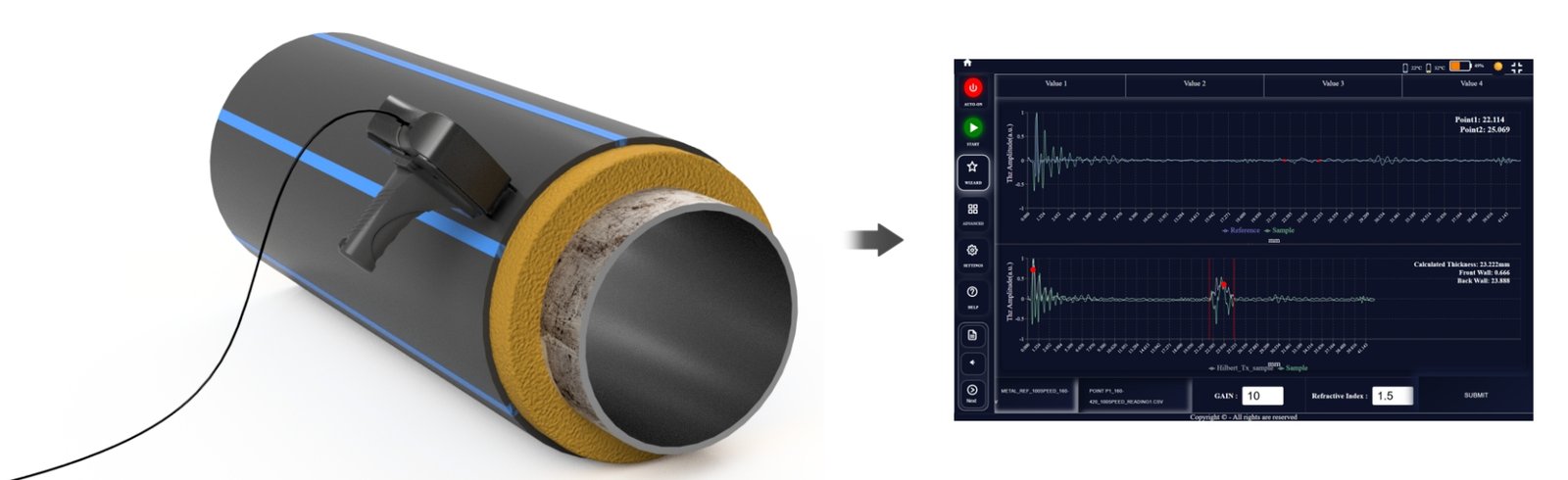
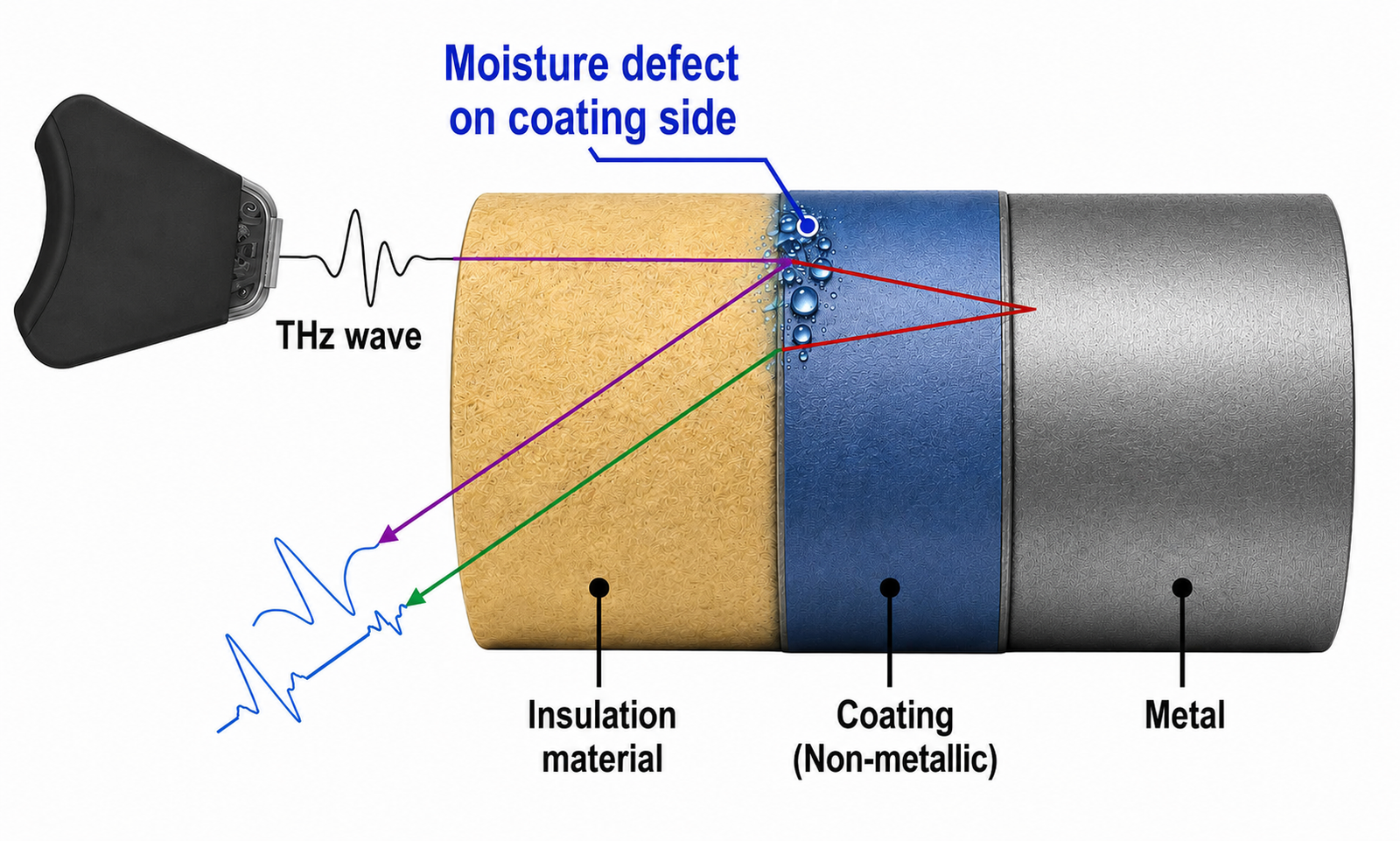
TeraNIM-OG uses reflected THz signals to inspect protective coatings and suitable PE / HDPE pipeline materials. For coated metal, the reflected signal can provide information on coating thickness, interface condition and corrosion indications beneath the coating. For PE / HDPE pipelines, signal changes can indicate voids, inclusions, air gaps and incomplete fusion defects.
TeraNIM Oil & Gas Inspection Workflow
Direct a THz pulse onto the coated pipeline or PE / HDPE component and acquire reflected signals using single-side, non-contact access.
Identify signal changes associated with coating thickness, corrosion beneath dielectric coatings, pipe-wall variation and internal defects such as voids, inclusions or incomplete fusion in PE / HDPE joints.
Determine coating or wall thickness, defect location and corrosion / fusion-joint indications, generate a 2D inspection map, and provide the Pass / Fail inspection result.
Key Advantages for Oil & Gas Operators & Manufacturers
- Non-Contact Inspection — THz measurement can be performed without physical probe contact with the inspected surface.
- Non-Destructive Testing — Inspect suitable coatings and polymer pipeline components without cutting or sectioning the asset.
- Corrosion Under Coating Detection — THz reflections can provide indications of corrosion beneath suitable dielectric protective coatings.
- Coating & Defect Mapping — Scanning multiple locations enables spatial evaluation of coating thickness and internal defect indications.
- PE / HDPE Pipeline Inspection — THz technology can evaluate suitable polyethylene pipe material and fusion joints for internal discontinuities such as voids, inclusions and incomplete fusion.
- Automation Ready — TeraNIM-OG can be integrated with scanners, robots or automated positioning systems for repeatable inspection.
Oil & Gas Quality Control with TeraNIM™
TeraNIM-OG provides a non-contact and non-destructive approach for inspecting suitable coatings, corrosion-under-coating conditions and polyethylene pipeline structures. By combining THz reflection measurement, signal processing and automated scanning, the system can support protective coating-thickness measurement, corrosion indication mapping, PE / HDPE pipe inspection, fusion-joint defect detection and digital Oil & Gas quality control.
System configuration
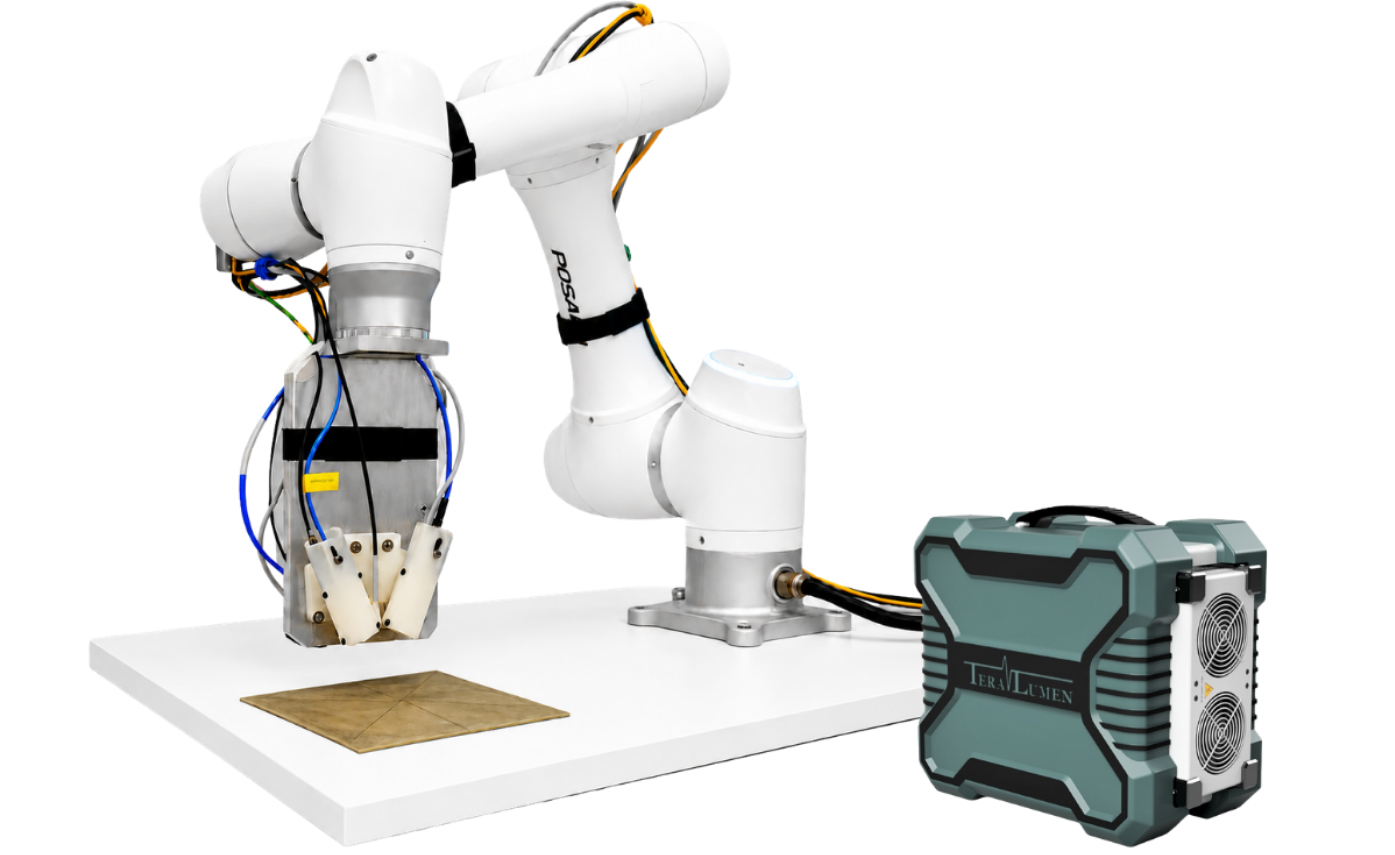
TeraNIM-OG
Recent Applications
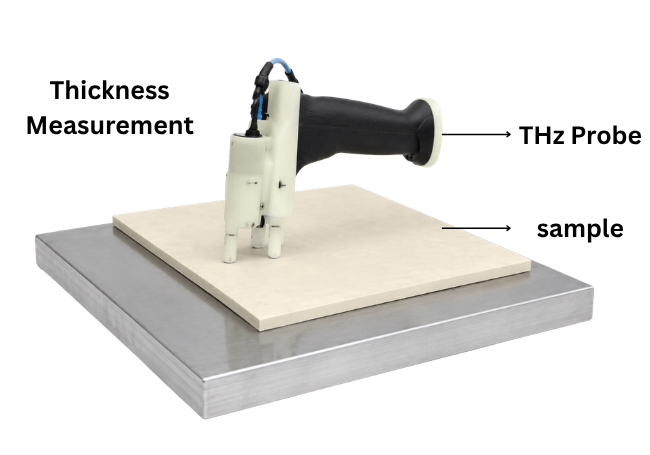
Quality Control of Polymer-Based Rubber Components
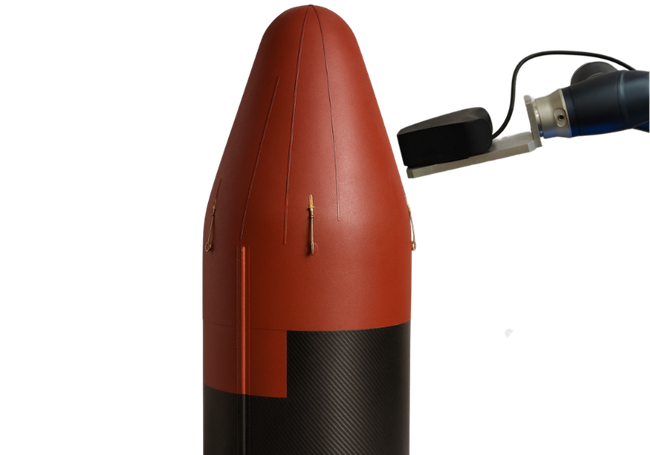
THz NDT on Red Rubber Components
Frequently Asked Questions
Can THz detect corrosion beneath protective coatings?
Yes. THz-TDS has been demonstrated for detecting and mapping corrosion beneath suitable dielectric coatings on metallic substrates. Measurement capability depends on coating material, coating thickness, corrosion condition and measurement configuration.
Can TeraNIM-OG measure protective coating thickness?
Yes, for suitable dielectric coating systems. Reflections from the coating surface and coating/substrate interface can be analysed using calibrated material properties to calculate coating thickness.
Can THz inspect HDPE or polyethylene pipelines?
Yes. Polyethylene is a dielectric polymer that can be inspected using THz under suitable material and thickness conditions. THz studies have demonstrated defect detection and wall-thickness evaluation in polyethylene pipes.
What defects can be detected in PE / HDPE fusion joints?
Depending on pipe composition, geometry and defect characteristics, THz inspection can be evaluated for defects including incomplete fusion, voids or holes and foreign inclusions.
Does THz inspection require liquid couplant?
No. THz inspection uses electromagnetic radiation and does not require the liquid couplant normally associated with conventional contact ultrasonic inspection.
Can THz inspect black HDPE pipe?
Black HDPE commonly contains carbon black, which strongly absorbs THz radiation. Penetration can therefore be significantly lower than in unfilled or lightly coloured polyethylene. Feasibility should be verified using the actual pipe material before defining the inspection method.