



Thermal Barrier
Coating Inspection
Terahertz Technology for Non-Contact TBC Thickness Measurement,
TGO Monitoring and Hidden Defect Detection.
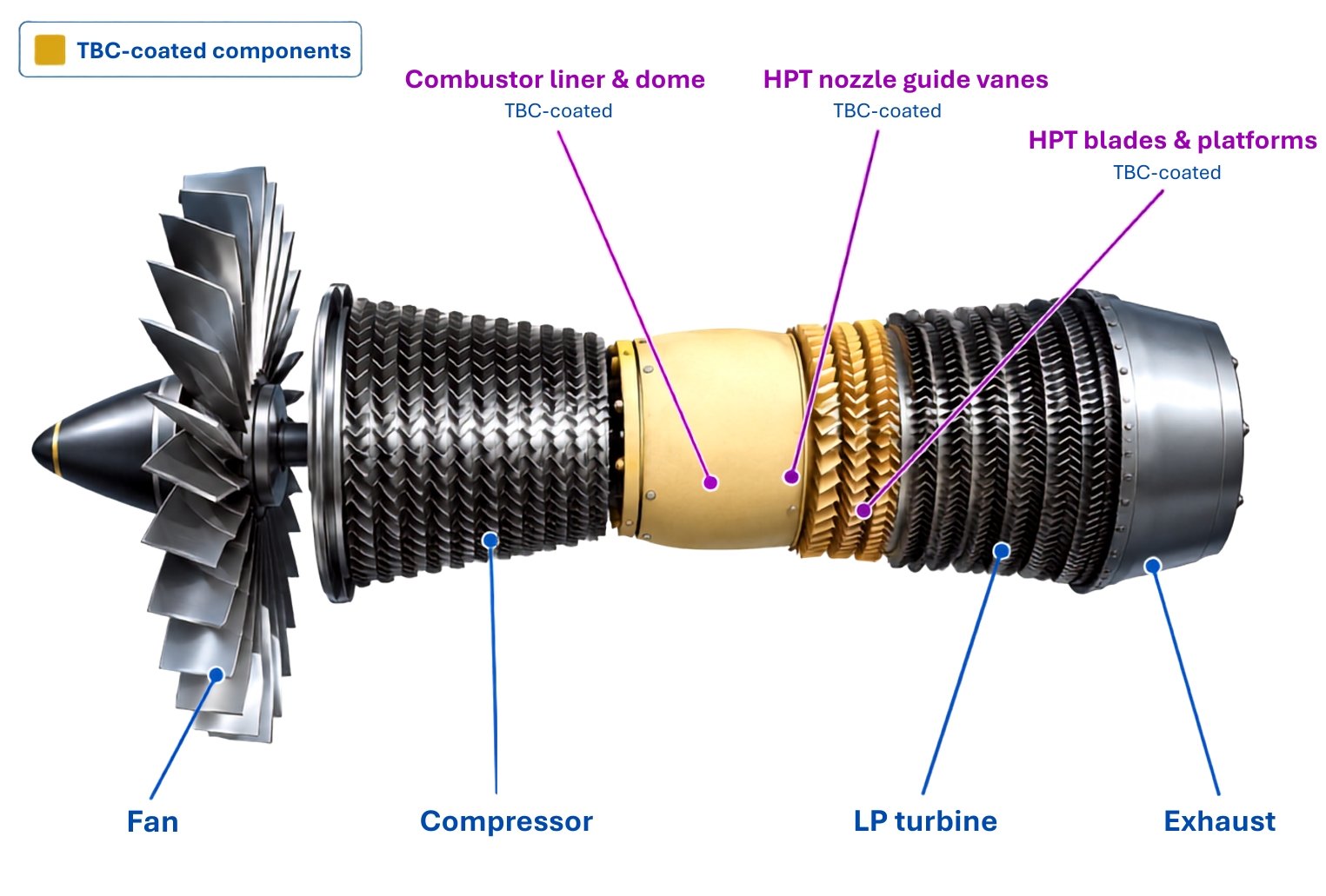
Thermal Barrier Coating (TBC) is applied on critical gas-turbine hot-section components in aerospace and power generation sectors. The TBC coatings protect metallic surfaces from extreme thermal, and environmental conditions thereby increases their lifespan. TBC performance depends on topcoat thickness, microstructure, porosity, thermally grown oxide (TGO) and coating–bond-coat interface integrity, which can evolve during processing and service.
TeraNIM-Aero™ uses Terahertz Time-Domain Spectroscopy (THz-TDS) to provide non-contact, non-ionising and non-destructive inspection of suitable TBC systems. It enables surface coating thickness assessment, interface evaluation and defect indication without sectioning or couplants—across turbine blades, vanes, combustor liners, shrouds and transition ducts.
Why Thermal Barrier Coatings Need Non-Contact Inspection?
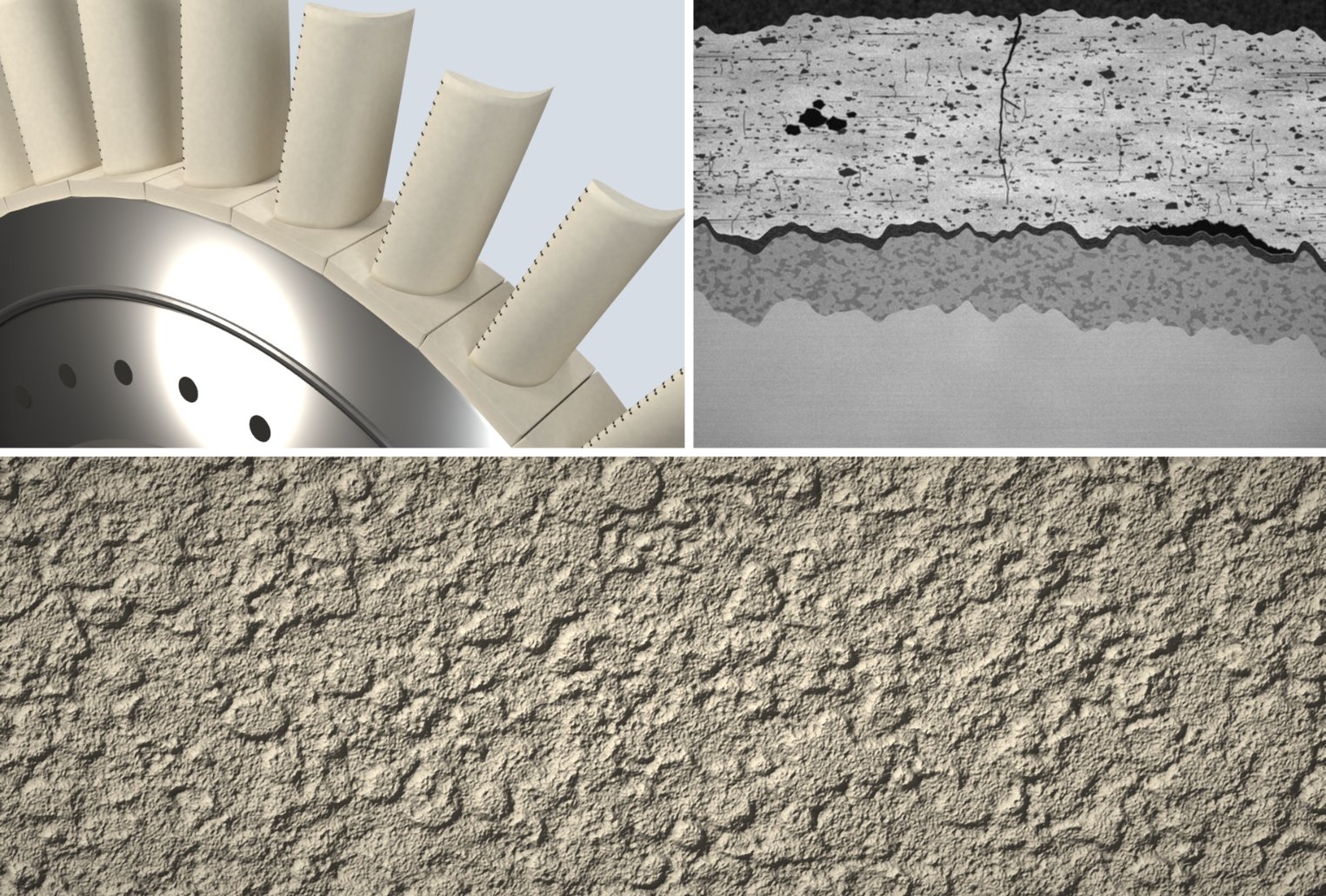
- Multilayer structure: ceramic topcoat, TGO, bond coat and metallic substrate
- TGO growth and ageing hidden beneath the ceramic topcoat
- Delamination, voids and air-filled cracks at unknown depth near the interfaces
- Porosity and microstructure that vary with the APS / EB-PVD process and thermal history
- Thickness variation and erosion across curved blade and vane surfaces
Conventional TBC Inspection Challenges
How Terahertz Technology Works for TBC Inspection
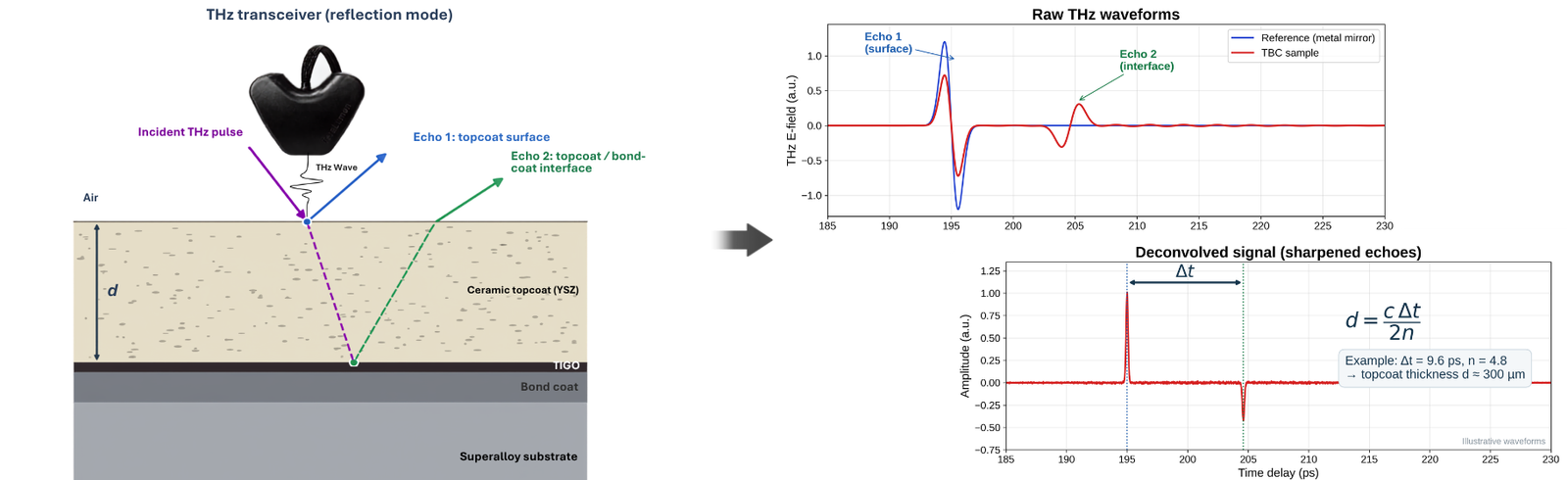
THz pulses penetrate the ceramic topcoat and reflect from material interfaces. The time delay between reflections provides information about coating thickness and interface depth.
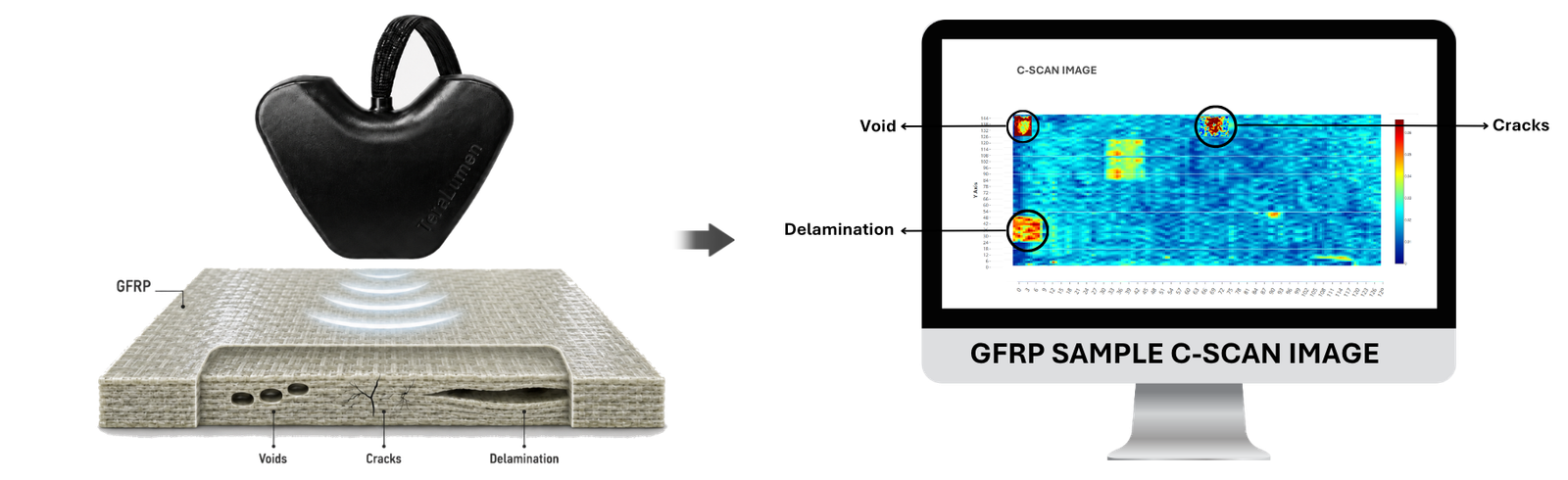
Delamination, voids and air-filled cracks alter the reflected THz waveform, producing changes in amplitude, phase or arrival time that can indicate defect presence and depth. The metallic substrate provides a strong reflection defining the coating boundary.
Advanced signal processing separates overlapping reflections, enabling extraction of coating and interface information from calibrated structures.
Terahertz Inspection Capability Across TBC Systems
| TBC system |
Thickness mapping |
Interface & delamination |
Porosity & structure |
Erosion & ageing |
|---|---|---|---|---|
|
Lamellar plasma-sprayed TBCs APS and APS-DVC · 7–8YSZ |
Topcoat thickness maps |
Air gaps and delamination |
Porosity from pulse broadening |
Erosion loss; TGO growth |
| Columnar TBCs EB-PVD, SPS and PS-PVD · 7YSZ |
Thickness maps on curved parts |
Delamination indications |
Column and gap structure |
Erosion loss; TGO growth |
|
Advanced low-K and CMAS- resistant TBCs Rare-earth-doped zirconia; Gd₂Zr₂O₇ or zirconate on YSZ double layers |
Total and per-layer thickness |
Layer interfaces and delamination |
Microstructure indicators |
Erosion loss; TGO growth |
|
Service-exposed TBCs (MRO) Any process, after engine running |
Remaining topcoat thickness |
Spallation and delamination maps |
Sintering and densification |
TGO growth and ageing state |
TeraNIM Thermal Barrier Coating Inspection Workflow
Direct a THz pulse onto the coated component in reflection mode and acquire reflected signals across the defined inspection area using single-side, non-contact scanning with controlled stand-off.
Identify reflections and signal changes associated with the topcoat surface, TGO and bond-coat interfaces, and internal discontinuities such as delamination, voids, porosity changes and coating loss.
Determine topcoat thickness, TGO and ageing indications, and defect location, generate 2D B-scan / C-scan coating maps, flag low-confidence pixels and provide the Pass / Fail inspection result.
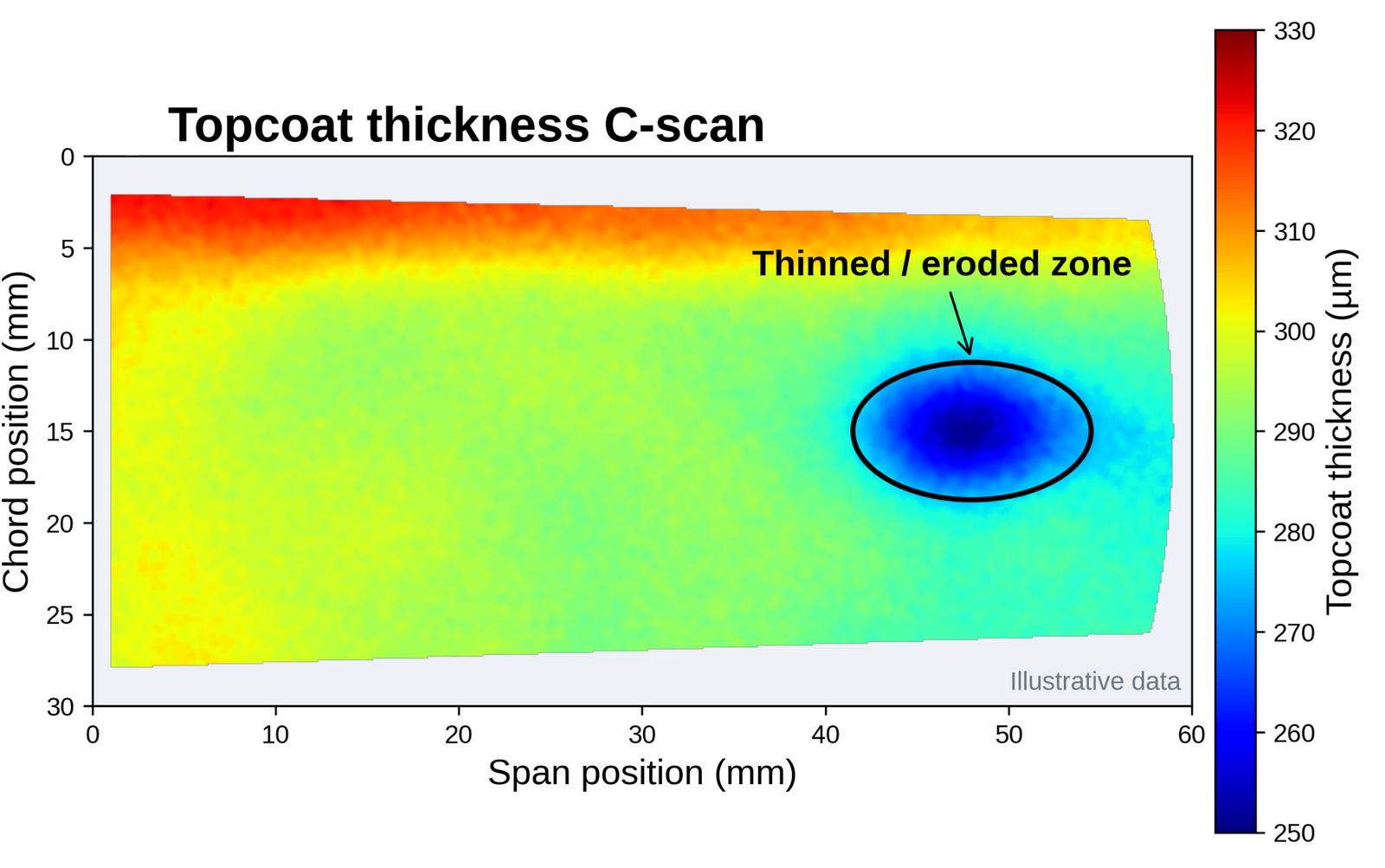
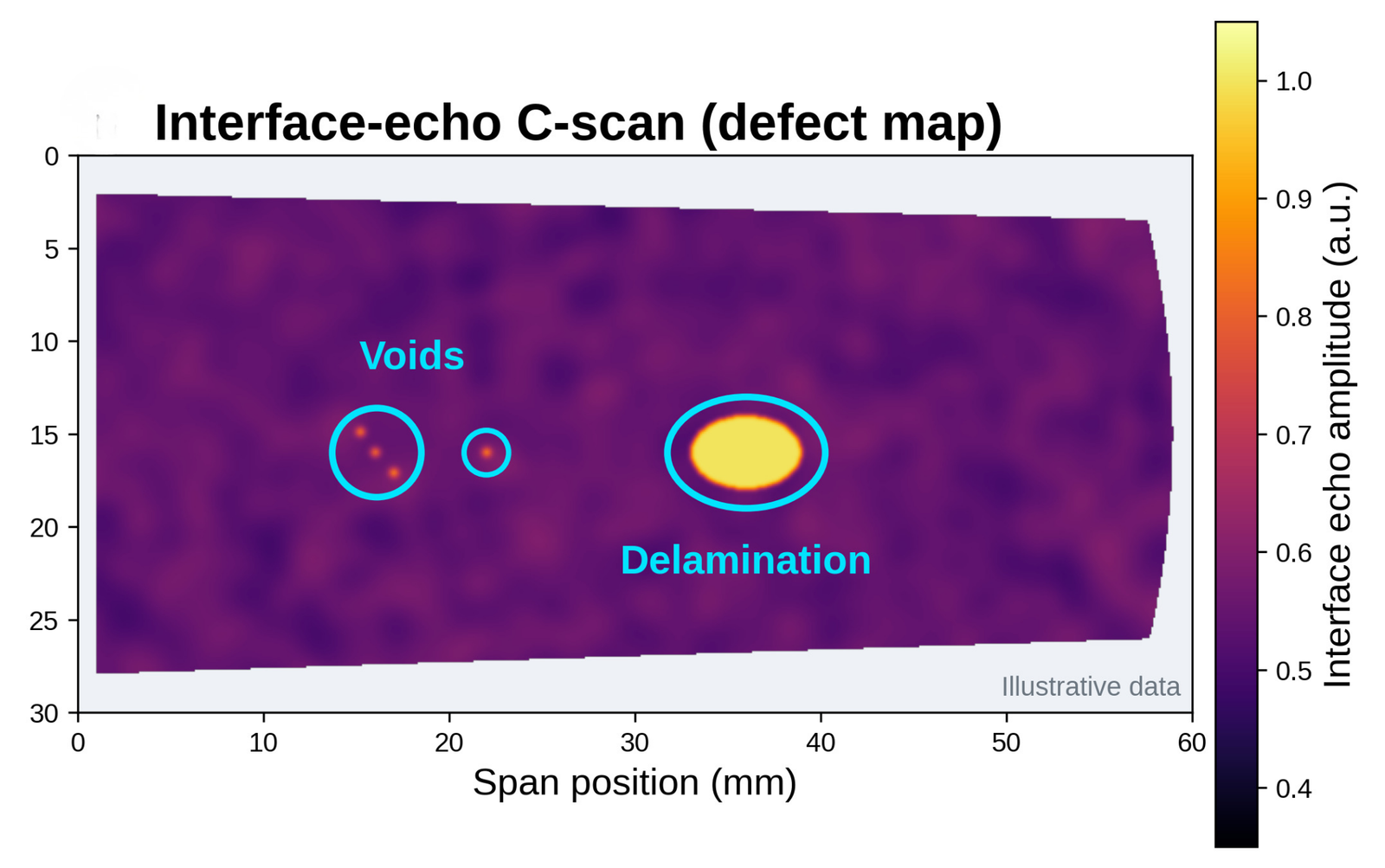
Thermal Barrier Coating Quality Control with TeraNIM™
TeraNIM-Aero provides a non-contact and non-destructive approach for inspecting validated thermal barrier coating systems. By combining THz reflection measurement, coating-specific refractive-index calibration, signal processing and automated scanning, the system can support topcoat thickness measurement, TGO growth monitoring, porosity indication, delamination detection, erosion mapping and automated hot-section component inspection.
System configuration
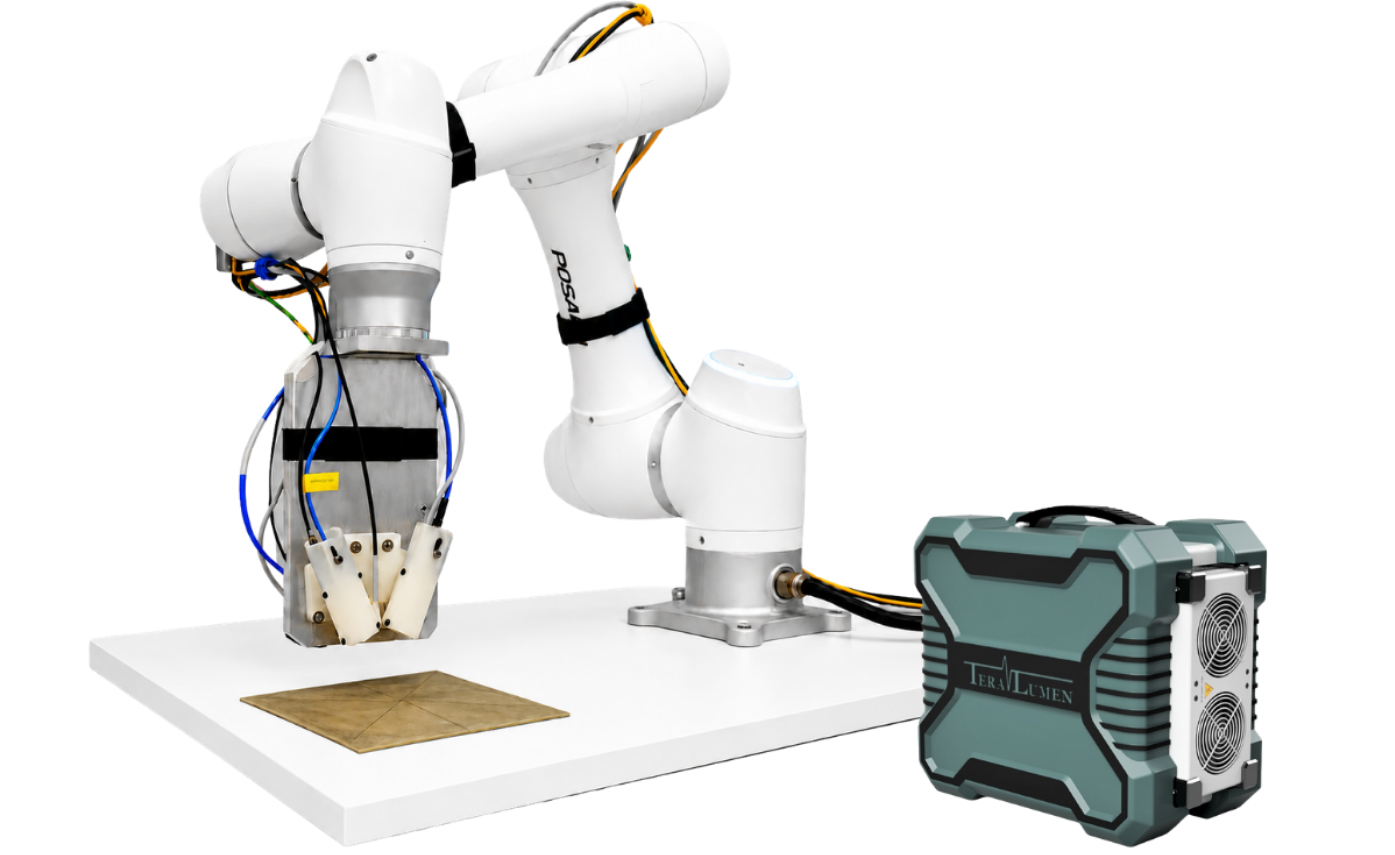
TeraNIM-Aero
Frequently Asked Questions
Can THz measure TBC thickness?
Yes. THz time-of-flight can be used to estimate TBC thickness when the surface and coating interface reflections can be distinguished. Accurate measurement requires calibration using representative coating materials and known refractive-index conditions.
Can THz detect TBC delamination and defects?
Yes. THz inspection can detect indications associated with delamination, voids, air-filled cracks, coating loss and other subsurface anomalies, depending on the coating structure, defect size, depth and measurement conditions.
Can TeraNIM-Aero detect TGO growth?
Yes. TGO growth can change the timing, phase and reflected THz waveform. Detecting very thin TGO layers may require phase-sensitive analysis, multilayer modelling and appropriate calibration.
Does THz inspection require couplant or physical contact?
No. THz inspection is non-contact and uses electromagnetic radiation, so it does not require the liquid coupling medium used in conventional contact-based ultrasonic inspection.
Can TeraNIM-Aero generate a TBC thickness or defect map?
Yes. By scanning across a component, THz measurements can be converted into spatial maps showing coating thickness, interface response and defect indications. For curved components such as turbine blades, surface tracking or distance control may be required.
Can THz replace conventional TBC inspection methods?
THz is complementary to conventional inspection methods rather than a universal replacement. It is particularly useful for non-contact evaluation and mapping of coating thickness, interfaces and subsurface defects, while methods such as SEM, ultrasonic testing and X-ray/CT can remain important for detailed characterisation and validation.