




Polymer-Based Rubber
Inspection in Aerospace
Terahertz NDT for Non-Contact Rubber Thickness,
Bond Integrity and Quality Control.
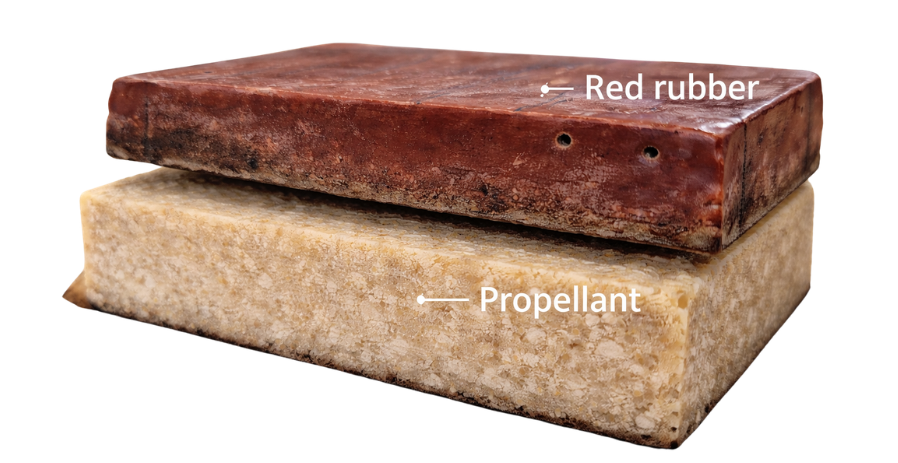
Polymer-based rubber materials such as EPDM, silicone rubber, NBR, FKM, neoprene and polyurethane elastomers are used in aerospace structures for sealing, vibration isolation, thermal protection and interface management. Thickness variation, air gaps and bonding discontinuities can affect component fit, assembly quality and service reliability.
TeraNIM-Aero helps inspect polymer-based rubber non-destructively and without physical contact, enabling aerospace teams to measure rubber thickness, thickness uniformity and bonded-interface condition using single-sided THz inspection without cutting or deforming the component.
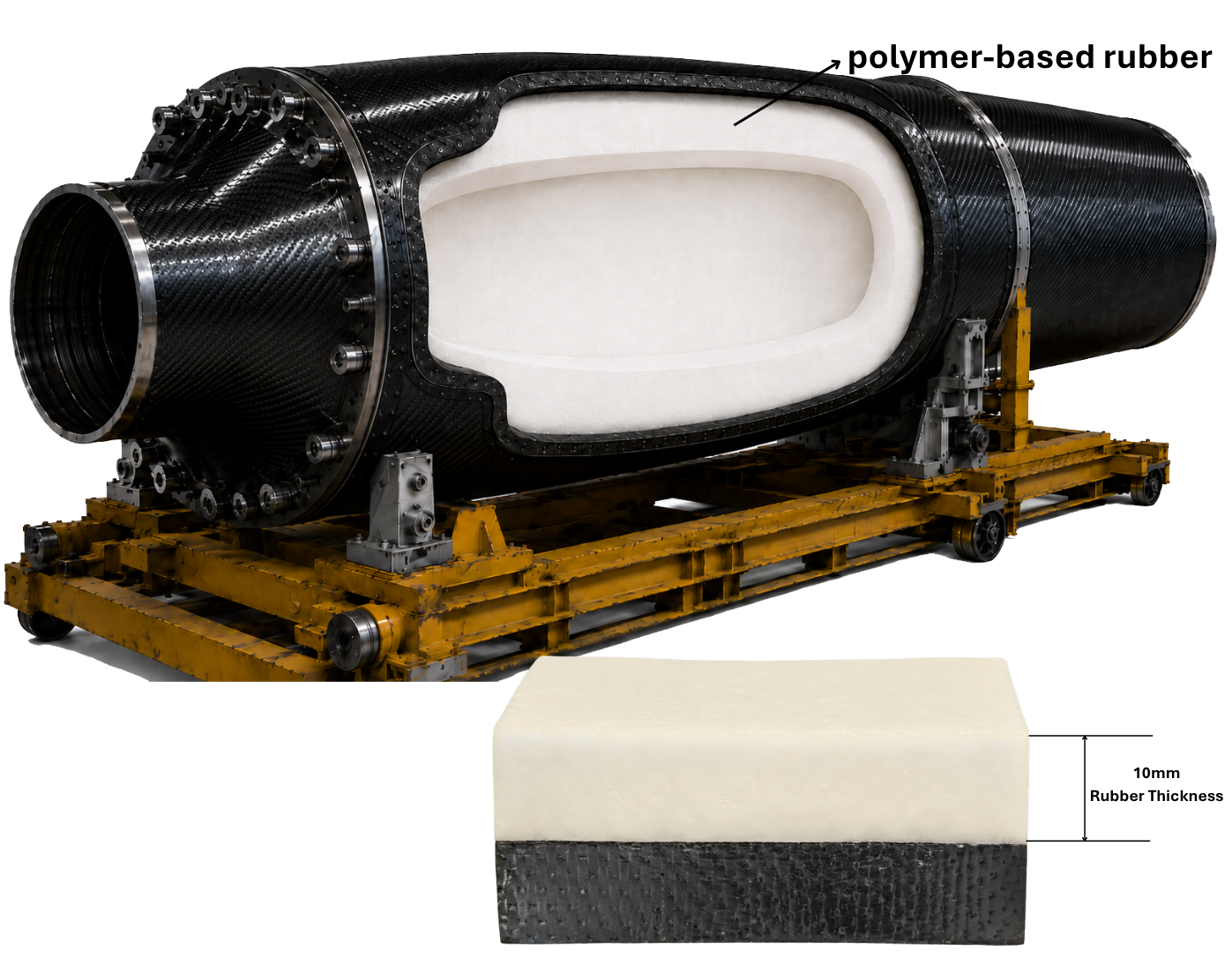
Why Polymer-Based Rubber Needs Non-Contact Inspection?
- Soft rubber can deform during contact thickness measurement
- Thickness can vary across bonded or curved components
- Air gaps and interface discontinuities can remain hidden
- Installed components may provide access from only one side
- Repeatable digital measurement is needed for production quality control
Conventional Polymer-Based Rubber Inspection Challenges
- Soft and deformable material
- Thickness variation
- Bonded or curved structures
- Hidden air gaps / interface anomalies
- Need for single-sided non-contact measurement
How Terahertz Technology Works for Polymer-Based Rubber Inspection
TeraNIM-Aero directs a short THz pulse onto the rubber component and analyses reflections generated from the front surface and internal material interfaces.
TeraNIM Polymer-Based Rubber Inspection Workflow
Direct a THz pulse onto the polymer-based rubber surface and acquire the reflected waveform using single-sided, non-contact access.
Identify the front-wall and back-wall/interface reflections and monitor changes associated with thickness or bonding discontinuities.
Convert the reflected-signal time delay into rubber thickness and thickness variation, then store the waveform, measurement settings and inspection result.
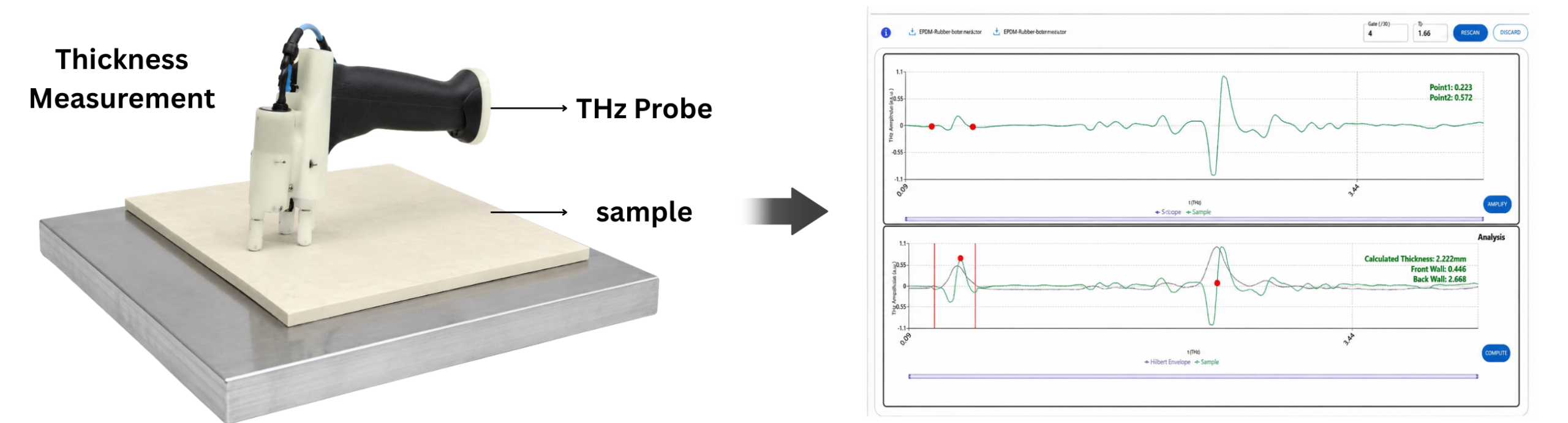
Key Advantages for Aerospace OEMs & Research Organisations
- Non-Contact Inspection – Measure rubber components without applying physical probe pressure.
- Non-Destructive Testing – Inspect bonded or installed rubber without cutting or sectioning the component.
- Single-Sided Measurement – Useful where the opposite side of the rubber layer cannot be accessed with a micrometer.
- Thickness Measurement – THz time-of-flight information can provide calibrated polymer-based rubber thickness.
- Traceable Digital Results – Waveforms, echo positions, settings and calculated thickness values can be stored for quality records.
- Automation Ready – TeraNIM-Aero can be integrated with scanners and automated positioning systems for repeatable production inspection.
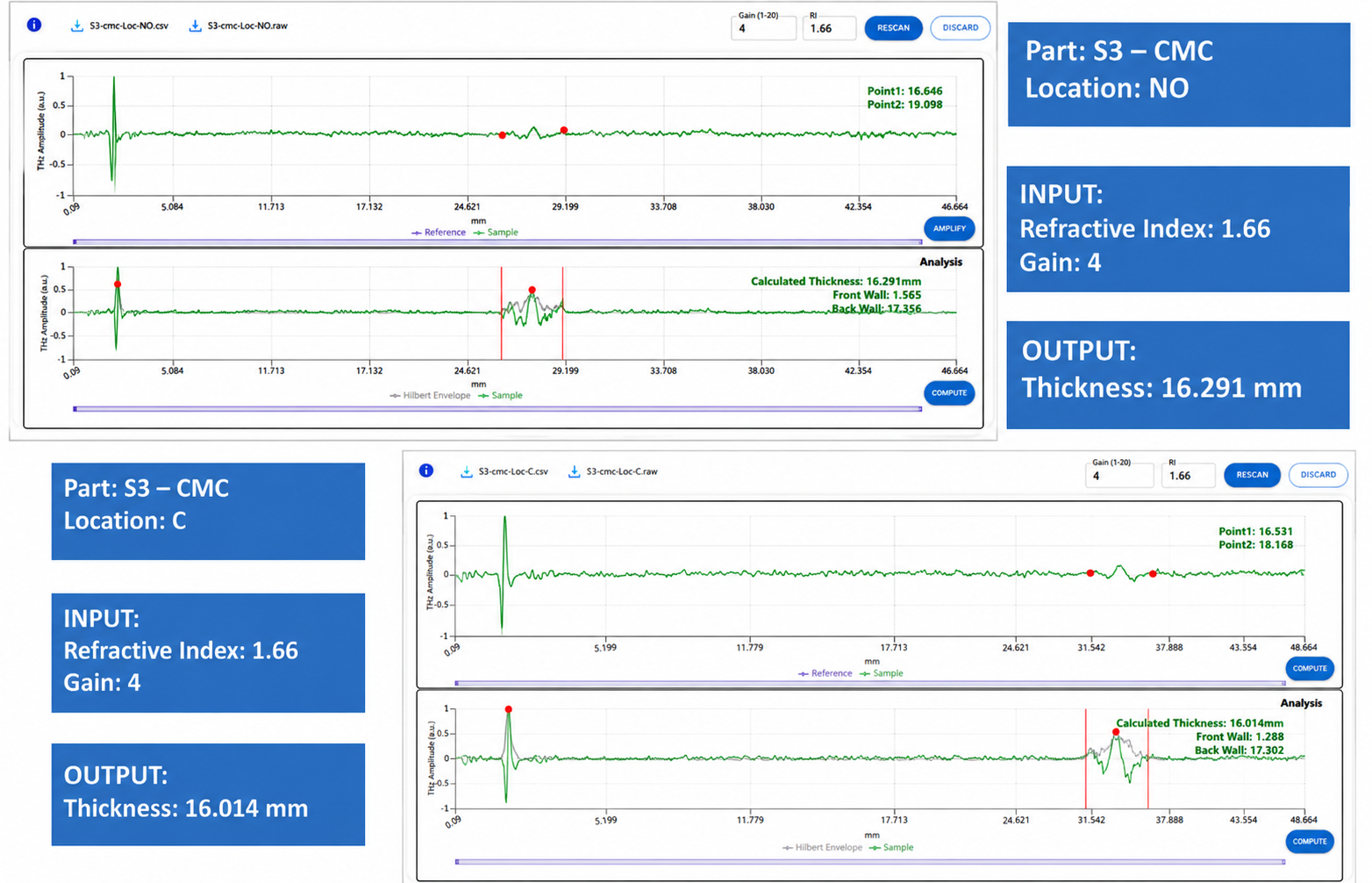
Polymer-Based Rubber Quality Control with TeraNIM™
TeraNIM-Aero provides a non-contact and non-destructive approach for thickness measurement and quality control of suitable polymer-based rubber components. By combining THz reflection measurement, material-specific refractive-index calibration and digital analysis, the system can support rubber thickness measurement, thickness-uniformity verification, bonded-interface evaluation and traceable aerospace manufacturing quality control.
System configuration
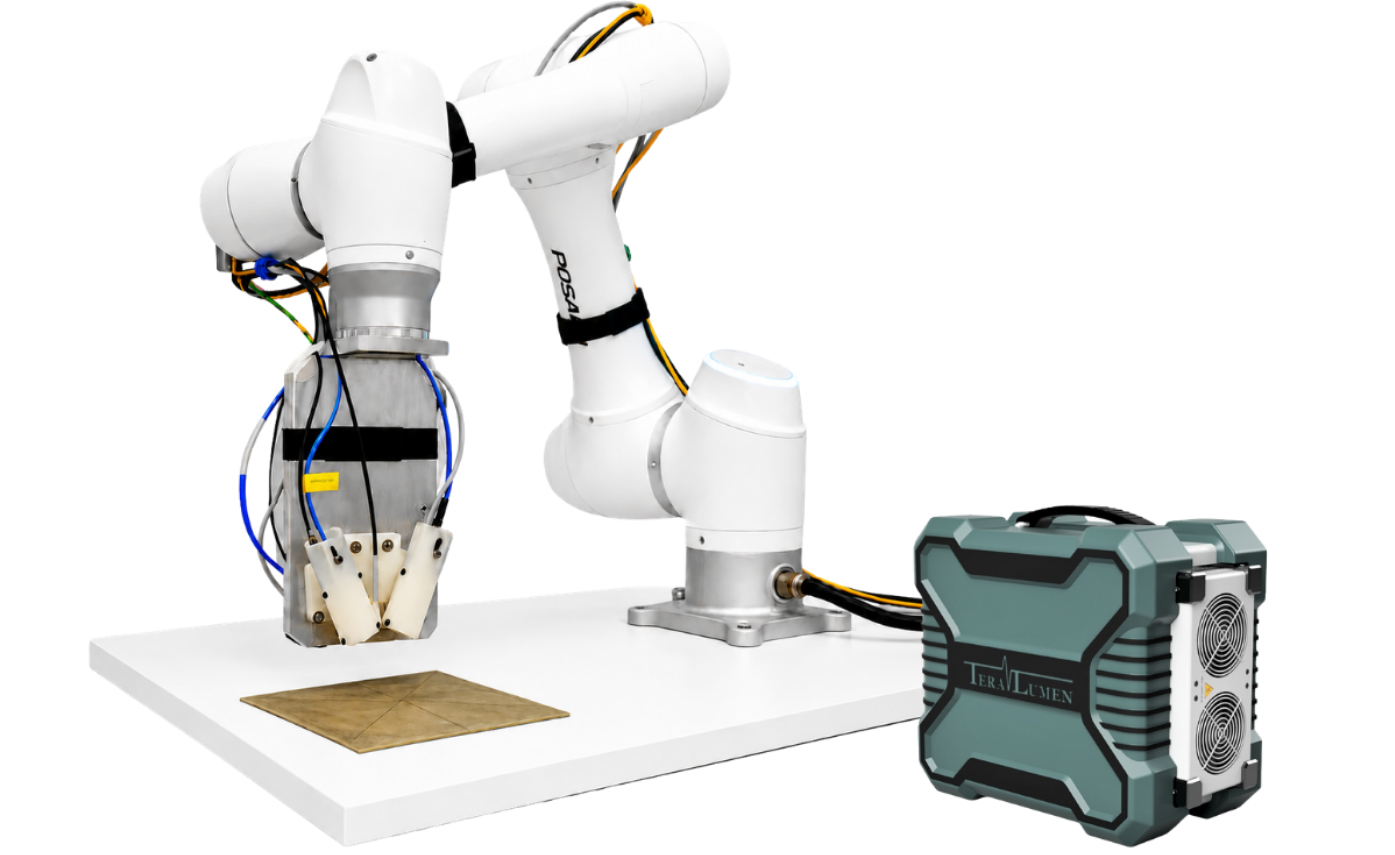
TeraNIM-Aero
Frequently Asked Questions
Can THz measure polymer-based rubber thickness?
Yes. For suitable low-loss rubber formulations, reflections from the front and back interfaces can be resolved and converted into thickness using a calibrated refractive index.
Which polymer-based rubber materials can be evaluated?
The current TeraLumen application identifies materials including EPDM rubber, silicone rubber, nitrile rubber, fluoroelastomer, neoprene and polyurethane elastomers as relevant aerospace polymer materials. Actual THz penetration and measurement capability should be verified for each formulation.
Does the rubber need to be accessed from both sides?
No. TeraNIM can operate in reflection mode, allowing thickness measurement from a single accessible surface.
Does THz measurement deform soft rubber?
No physical compression is required because the measurement is non-contact. This helps avoid the thickness bias that can occur when soft rubber is compressed by contact gauges.
Is calibration required for different rubber formulations?
Yes. The refractive index depends on the material formulation. A known-thickness coupon or verified reference can be used to calibrate the material before thickness measurement.
Can TeraNIM measure thickness variation across a component?
Yes. Measurements at multiple positions can be compared to evaluate local thickness variation. In TeraLumen's reported EPDM study, approximately 0.25 mm thickness variation was resolved across seven measured locations.