









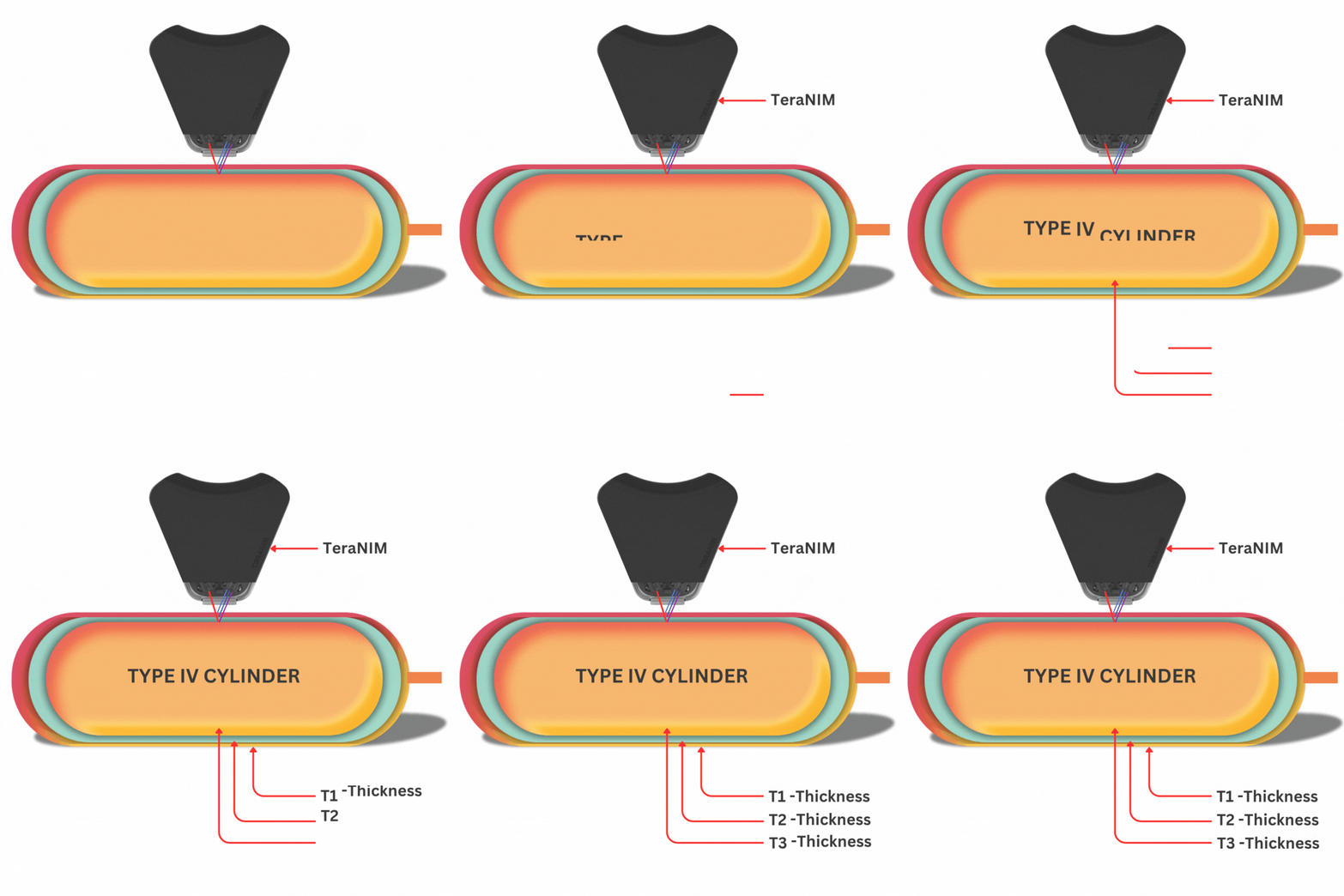

Type IV Cylinder
Inspection
Terahertz NDT for Non-Contact Polymer Liner,
Composite Interface and Internal Defect Inspection.
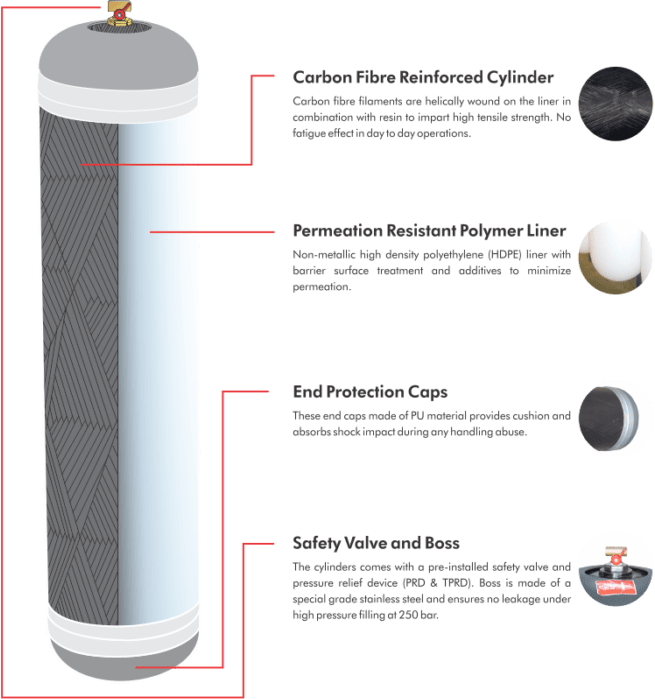
Type IV cylinders are lightweight, high-pressure gas storage vessels used for hydrogen, compressed natural gas and other high-pressure gas applications. They typically consist of a polymer liner such as HDPE or polyamide, a carbon-fibre composite overwrap, optional glass-fibre reinforcement and a metallic boss/valve region.
During manufacturing and service, defects such as voids, inclusions, delamination, liner blistering, cracks, incomplete bonding and local thickness variation can develop within the liner or composite structure. Hydrogen exposure and rapid depressurization can also promote blistering and cavitation-type damage in polymer liners.
TeraNIM uses Terahertz Time-Domain Spectroscopy (THz-TDS) for non-contact and non-destructive inspection of suitable Type IV cylinder materials, enabling evaluation of polymer liner thickness, liner integrity, GFRP/CFRP interfaces and internal defects without cutting the component or applying liquid couplant.
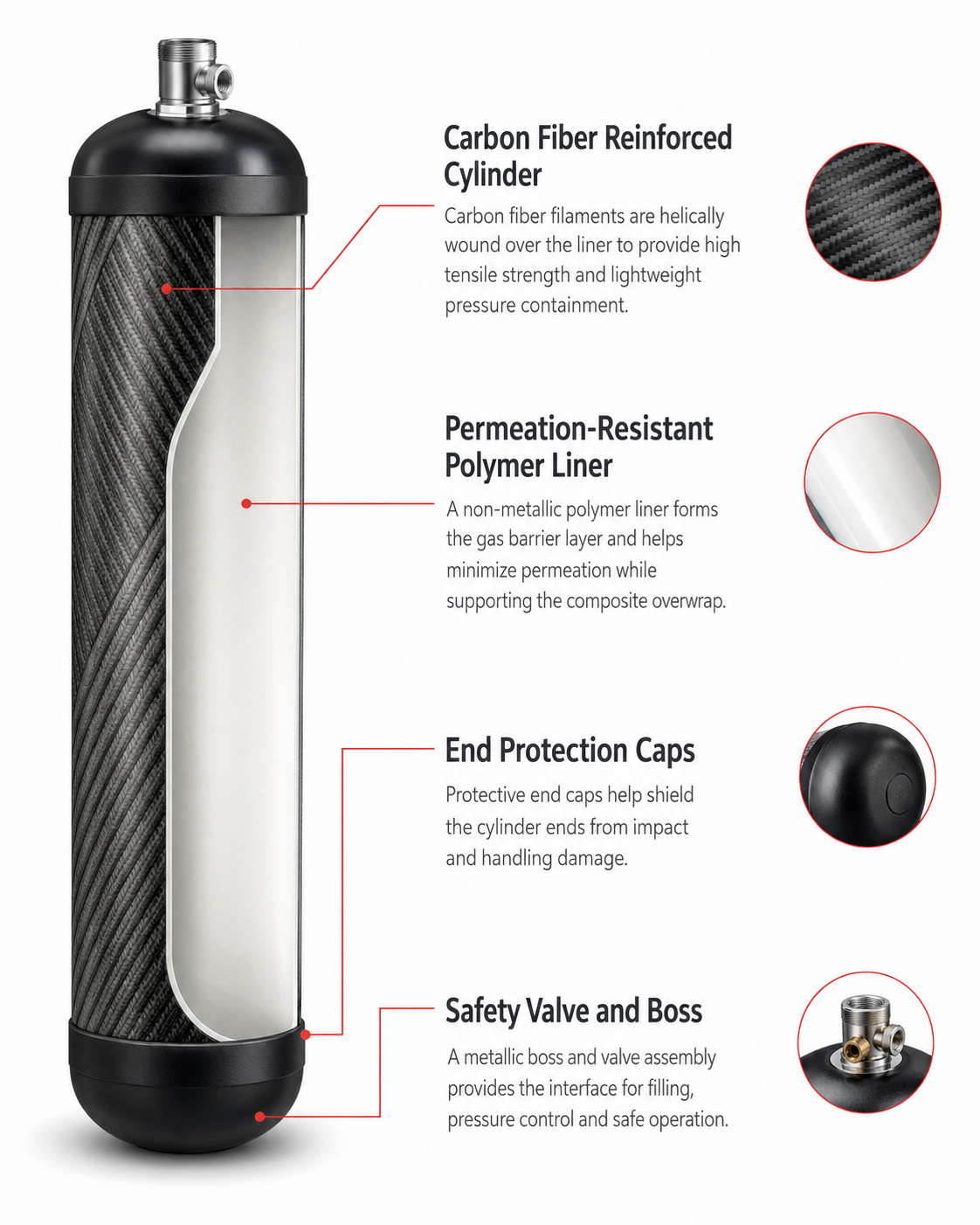
Why Type IV Cylinders Need Non-Contact Inspection?
- Polymer liners can develop blisters, cavities and cracks during high-pressure gas service and rapid decompression
- Composite overwraps can contain voids, inclusions and delamination from manufacturing or service
- Liner-to-composite interfaces may develop bonding or interface defects
- Wall and liner thickness can vary across curved cylinder structures
- Non-contact, single-sided inspection is valuable for automated inspection of high-pressure composite vessels
Conventional Type IV Cylinder Inspection Challenges
- Polymer liner beneath composite wrap
- Hidden voids and delamination
- Liner blistering / cracking
- Curved multilayer structure
- Need for non-contact inspection
How Terahertz Technology Works for Type IV Cylinder Inspection
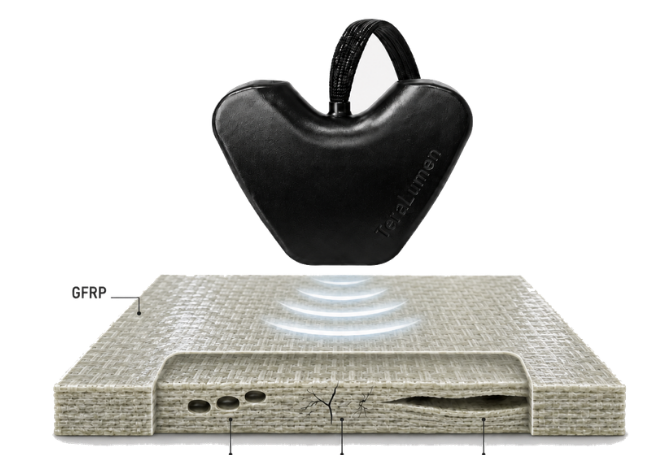
TeraNIM directs a THz pulse into the accessible non-metallic layers of the Type IV cylinder and analyses reflections from material interfaces and internal discontinuities.
TeraNIM Type IV Cylinder Inspection Workflow
Direct a THz pulse onto the Type IV cylinder surface and acquire reflected signals using single-side, non-contact access.
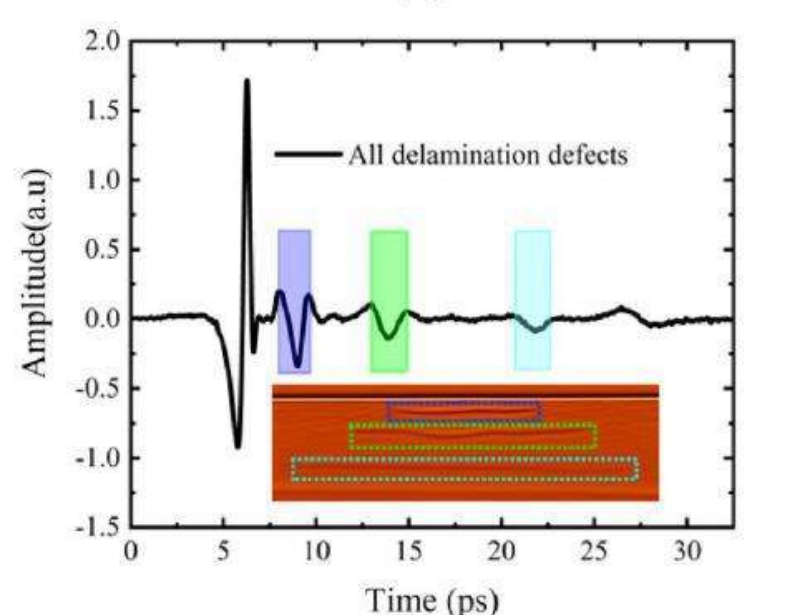
Identify reflections and signal changes associated with the polymer liner, composite/liner interface and internal discontinuities such as voids, delamination, blistering or bonding anomalies.
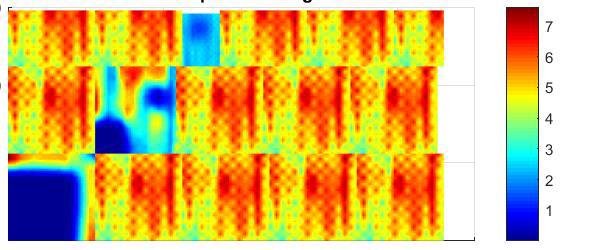
Determine liner thickness, defect location and interface condition, generate a 2D inspection map, and provide the Pass / Fail inspection result.
Key Advantages for Type IV Cylinder Manufacturers
- Non-Contact Inspection — THz measurement can be performed without physical probe contact with the cylinder surface.
- Non-Destructive Testing — Inspect suitable polymer liner and composite structures without cutting or sectioning the vessel.
- Liner Integrity Assessment — THz can be evaluated for liner-thickness variation, blistering, cavities and other internal polymer discontinuities.
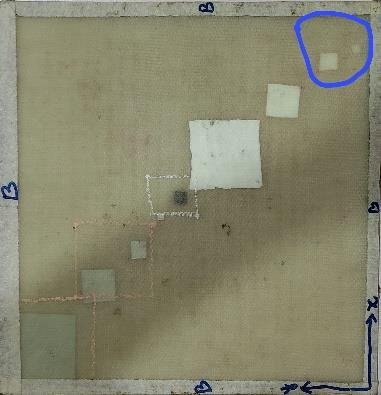
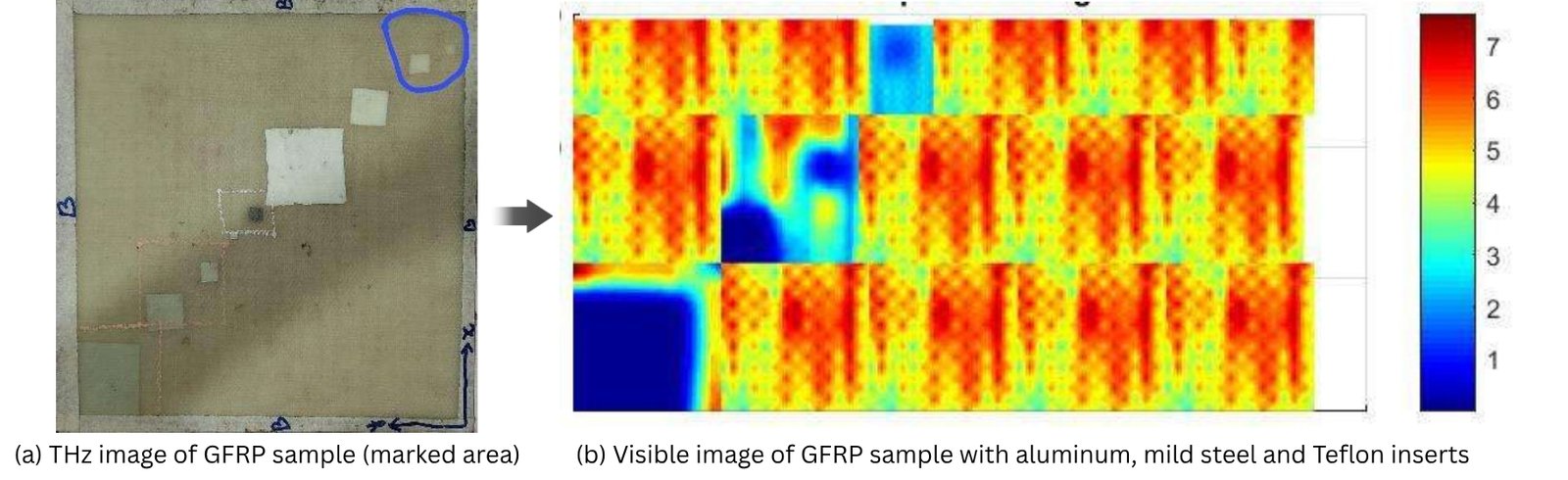
- Delamination & Void Detection — Internal voids, inclusions and delamination can alter the reflected THz response in suitable composite structures.
- Thickness & Defect Mapping — Multiple scan positions can provide spatial information on liner thickness and internal defect distribution.
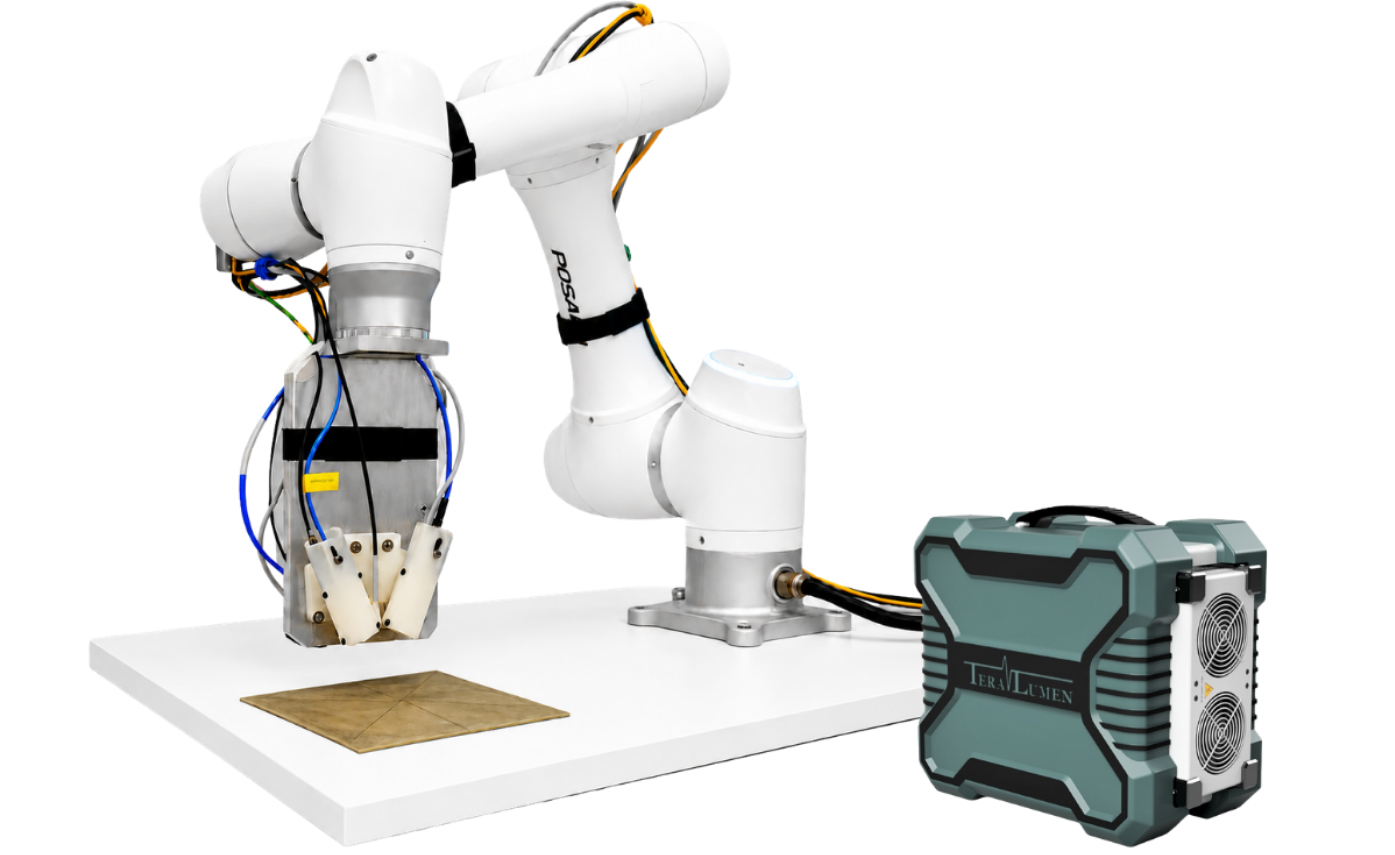
- Automation Ready — TeraNIM can be integrated with scanners, robots or automated positioning systems for repeatable cylinder inspection.
Type IV Cylinder Quality Control with TeraNIM™
TeraNIM provides a non-contact and non-destructive approach for inspecting suitable polymer liners and composite interfaces in Type IV cylinders. By combining THz reflection measurement, signal processing and automated scanning, the system can support liner thickness measurement, void and inclusion detection, delamination assessment, liner-integrity evaluation and digital Type IV cylinder quality control.
System configuration
TeraNIM
Frequently Asked Questions
Can THz inspect the polymer liner in a Type IV cylinder?
Yes, for suitable liner materials and inspection configurations. Type IV cylinders commonly use polymer liners such as HDPE, PA6 or related thermoplastics, which can be evaluated with THz depending on thickness, absorption and access geometry.
Can THz detect blistering or cavities in the liner?
Potentially yes. Blistering and cavities are known failure modes in Type IV polymer liners, particularly after hydrogen exposure and rapid decompression. These discontinuities can create local changes in electromagnetic interfaces that may be detectable using THz after application validation.
Can TeraNIM detect voids and delamination in the composite structure?
Yes, for suitable non-metallic composite regions. THz imaging of hidden inclusions in GFRP samples has already been demonstrated, positioning the method for void and delamination inspection.
Can TeraNIM measure polymer liner thickness?
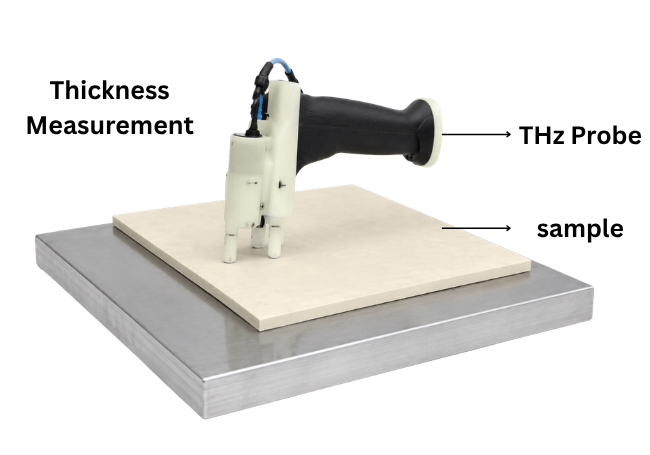
Yes, provided the relevant interfaces can be resolved and the liner material is calibrated. Time-of-flight analysis of the THz reflections can then be used to determine thickness.
Does THz inspection require liquid couplant?
No. THz uses electromagnetic radiation and does not require the liquid coupling medium used in conventional contact ultrasonic inspection.
Can THz inspect the carbon-fibre overwrap directly?
This requires caution. Carbon fibre is electrically conductive and strongly attenuates THz radiation. Inspection feasibility depends on fibre architecture, thickness, orientation and whether the target region is accessible through a less-absorbing composite layer or representative inspection coupon. For that reason, the strongest TeraNIM positioning is polymer liner, GFRP regions, liner/composite interfaces and suitable non-metallic composite structures, rather than claiming unrestricted inspection through thick CFRP overwrap.