




Role of structural asymmetry in tailoring electromagnetically induced transparency and figure of merit in terahertz metamaterials
Authors: Dheeshna Nadukandi Purayil, Namitha Nandakumar, Sutopa Modak, Prakash Pitchappa and Abhishek Kumar.
Published Online: 9 March 2026
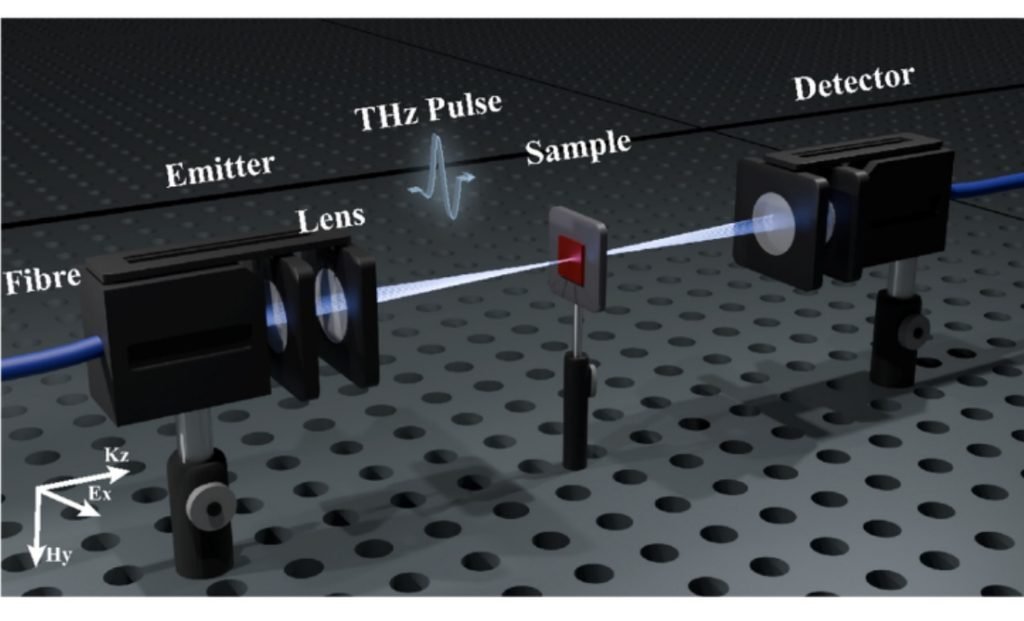
Abstract: Electromagnetically induced transparency (EIT) in metamaterials, a classical analog of quantum EIT, exhibits a sharp transparency window with steep dispersion, enabling applications such as sensing and slow-light devices. Although EIT has been widely demonstrated, systematic investigations into tuning and optimizing the response through structural parameters remain limited. In this work, we present a terahertz metamaterial composed of a double split-ring resonator unit cell, where EIT is tuned by varying the structural asymmetry (α). We evaluate the figure of merit of EIT using two approaches. The first approach considers the product of the quality factor and transmission intensity, while the second is based on the product of the group delay and transmission intensity. Both methods identify intermediate values of α as optimal for achieving a strong and spectrally selective EIT response. This study demonstrates the effectiveness of structural asymmetry in tuning the EIT characteristics and provides insights into the design of adaptable terahertz photonic devices.
Disclaimer: Thank you for publishing your research using the TeraLumen-TeraXplor system
Latest publications
- Ultra-Broadband Terahertz Flexible Meta-Absorber
- Role of structural asymmetry in tailoring electromagnetically induced transparency and figure of merit in terahertz metamaterials
- Understanding Terahertz Waves: The Science, Applications & Technology
- Identification of adulterants in turmeric powder using terahertz spectroscopy
- Design and Engineering of Organic Molecules for Customizable Terahertz Tags
- Terahertz Spectroscopy and Solid-State Density Functional Theory Calculations of Cyanobenzaldehyde Isomers
- Comparative Study of Hydration Kinetics of Cement and Tricalcium Silicate Using Terahertz Spectroscopy and Density Functional Theory Simulations